
Updated on March 25, 2026 Responding to Climate Change
- GHG Emissions (Scope 1, 2)
- GHG Emissions (Scope 3)
- TCFD
GHG Emissions (Scope 1, 2)

The GHG Protocol* classifies GHG emissions into three categories: Scopes 1, 2 and 3.
- Scope 1: Direct emissions
GHG emissions generated by fuel combustion at the plants and other facilities of one’s own company
- Scope 2: Indirect emissions
GHG emissions generated by the use of purchased energy such as electricity, heat, and steam supplied by other companies
- Scope 3: Other indirect emissions
The other indirect emissions. GHG emissions along the entire supply chain (from procurement of raw materials to product disposal.)
*
GHG Protocol (Greenhouse Gas Protocol) is an initiative to develop international standards and related tools on greenhouse gases and climate change led by the World Resources Institute (WRI) and World Business Council for Sustainable Development (WBCSD) and participated in by corporations, NGOs, government institutions and other organizations throughout the world.
Initiatives and Results
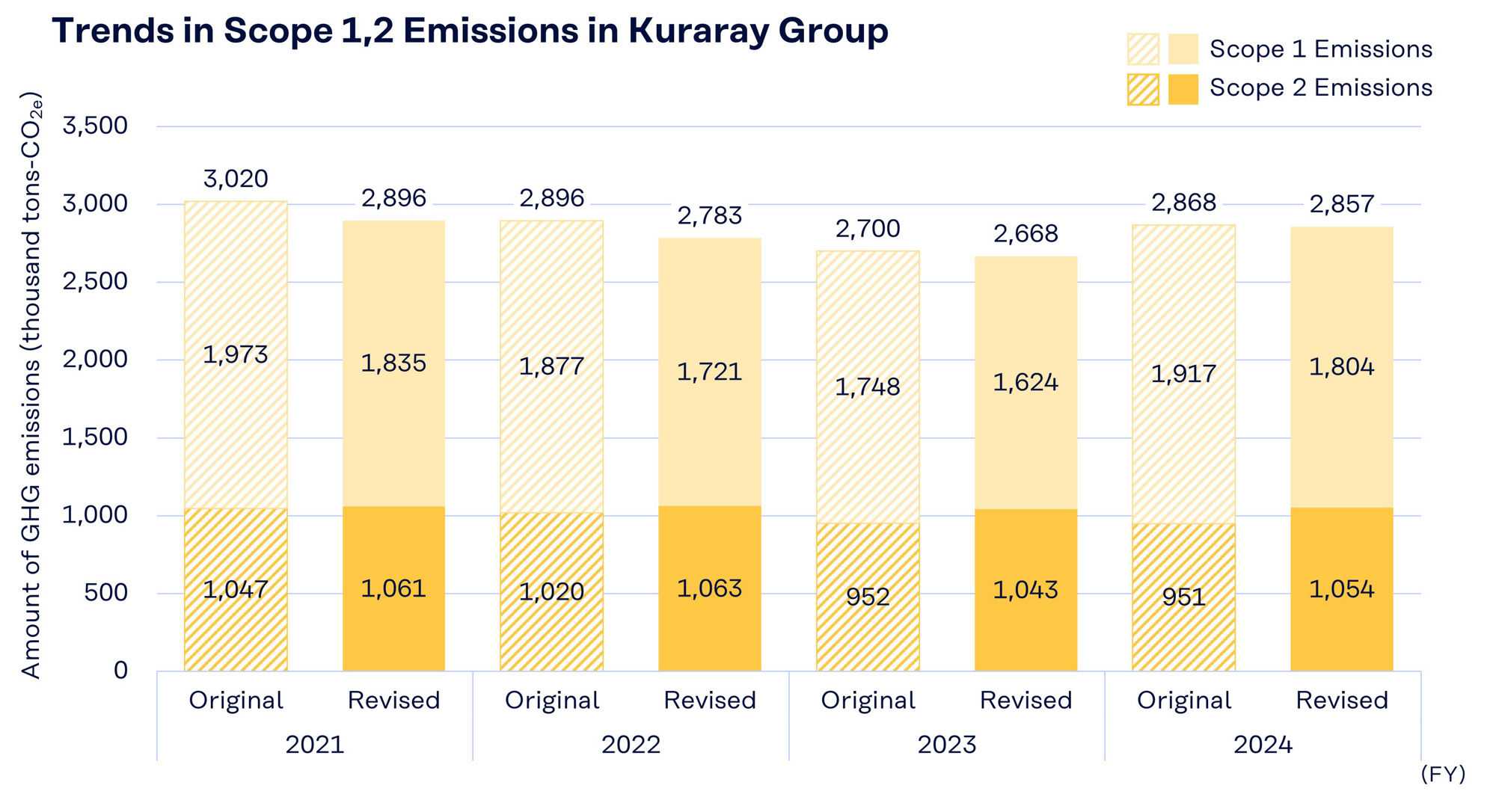
Total GHG emissions (Scope 1, 2) of the Kuraray Group increased by 7.1% from 2,668 thousand tons-CO2e in 2023 to 2,857 thousand tons-CO2e in 2024. (decreased by 1.3% compared to the results in 2021).
GHG emissions of the Kuraray Group in Japan increased from 1,145 thousand tons-CO2e in 2023 to 1,187 thousand tons-CO2e in 2024. This increase was due to higher production in some businesses compared to the previous year, which led to an increase in emissions from fuel and utilities. However, each Kuraray Group production site in Japan continued to work on GHG reduction measures, such as improving product yield, recycling raw materials and utilities, upgrading to energy-saving equipment, and carrying out energy-saving activities (waste elimination activities). In 2024, we implemented measures to reduce 17 thousand tons-CO2e minimizing the increase in emissions.
GHG emissions of the Kuraray Group outside Japan increased from 1,523 thousand tons-CO2e in 2023 to 1,661 thousand tons-CO2e in 2024. (In 2024, the Kuraray Group obtained unbundled energy attribute certificates and procured utilities through the rate plan for renewable energy sources equivalent to 117 thousand tons-CO2e, which are included in this GHG emission reductions.) The Kuraray Group outside Japan is also continuing to work on energy saving and product yield improvement that leads to GHG emission reductions at each production site. However, due to the launch of new production lines at Pearl River Plant of Calgon Carbon Corporation and the new plant in Poland of MonoSol LLC, as well as the full-scale operation of new production site for isoprene-related products at Thailand plant, leading to increased production and energy consumption, resulting in higher GHG emissions.
The Kuraray Group’s total GHG emissions increased in the period from 2014 to 2019 due to the incorporation of businesses through M&A, such as the acquisition of the vinyl acetate business and the activated carbon business (Calgon Carbon Corporation). In particular, the acquisition of Calgon Carbon Corporation in 2018 resulted in a significant rise in the Kuraray Group’s GHG emissions. The GHGs emitted by Calgon Carbon Corporation consist largely of the CO2 generated as a byproduct in the process of producing activated carbon products. Activated carbon is produced by burning a part of coal used in the process to form micropores on its surface. At this stage of the process, the carbon removed from the surface of the coal to form micropores is released into the atmosphere as CO2. In this way, activated carbon emits a large amount of CO2 during production. On the other hand, activated carbon is widely used around the world as an indispensable product for the adsorption and removal of hazardous chemical substances contained in factory waste gas and for the purification of industrial effluents and raw water for drinking. Activated carbon thus contributes greatly to improving the global environment and reducing environmental impact. The Kuraray Group will continue to consider establishing the technologies to implement Carbon dioxide Capture, Utilization and Storage (CCUS) system applicable to by-product CO2 in the production process. We will also continue to invest in energy-saving, fuel conversion, and the transition to renewable energy for electricity. Furthermore, we are exploring the procurement of emission-free clean energy sources such as green hydrogen and green ammonia around 2035. We aim to achieve a 63% reduction in GHG emissions compared to 2021 levels by 2035, and Carbon Net Zero by 2050.
< Regarding the Revision of GHG Emissions >
The Kuraray Group has reviewed its calculation methodology to improve the accuracy of accounting for byproduct CO₂ generated in the new activated carbon manufacturing process at Calgon Carbon. In addition, in light of feedback received from a third-party organization during the preparation process for obtaining voluntary assurance of GHG emissions, we improved the accuracy of the underlying activity data and emission factors. We also expanded the scope of calculation. As a result of these improvements, starting in 2024, the Kuraray Group implemented retroactive revisions back to 2021, which served as the base year for its Group’s GHG emissions reduction targets. The results of the revision and details of the changes are shown in the table below.
Table: Breakdown of Revisions to Scope 1 and 2 Emissions
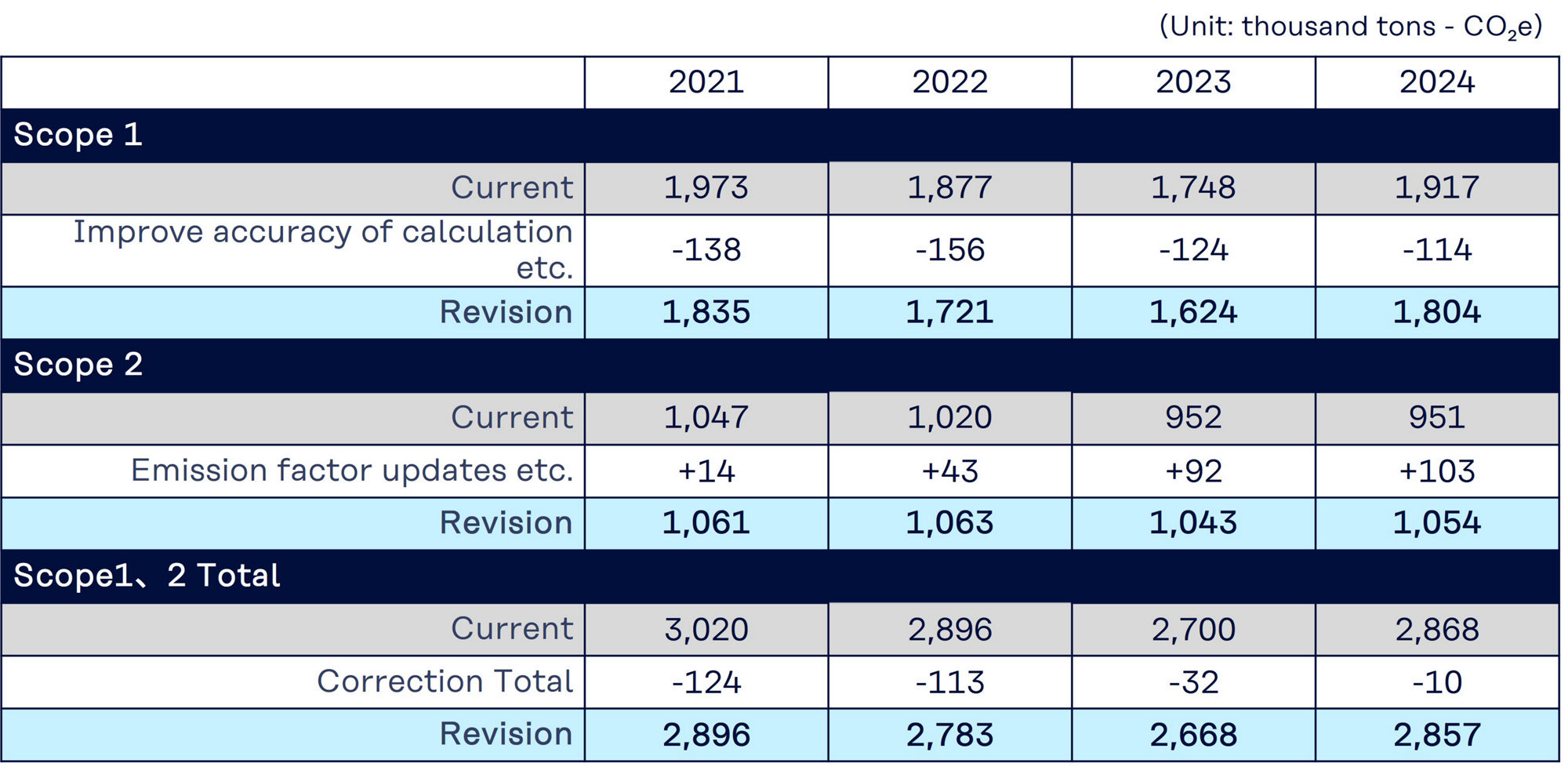
Key Revisions to Scope 1 and Scope 2 Emissions
・Improved accuracy in the calculation of by-product CO2 emissions from the production of activated carbon at Calgon Carbon (Increase in Scope 1).
・Updates of the emission factor for purchased steam at production sites in the United States; Revisions of energy unit of purchased steam at production site outside Japan, etc. (Decrease in Scope 2).
<GHG emissions (Scope 1, 2) (Entire Kuraray Group)>
(Unit : Thousand tons-CO2e)
| Kuraray Group | 2021 | 2022 | 2023 | 2024 |
|---|---|---|---|---|
| GHG emissions (Scope 1, 2) | 2,896 | 2,783 | 2,668 | 2,857 |
| Scope 1 emissions | 1,835 | 1,721 | 1,624 | 1,804 |
| Japan | 1,163 | 1,047 | 970 | 1,021 |
| Overseas | 672 | 674 | 655 | 773 |
| Scope 2 emissions | 1,061 | 1,063 | 1,043 | 1,054 |
| Japan | 178 | 189 | 175 | 166 |
| Overseas | 884 | 873 | 868 | 888 |
*
The GHG emissions shown on this page reflect revisions implemented in March 2026.
For GHG emissions before the revision, please refer here.
Energy Consumption
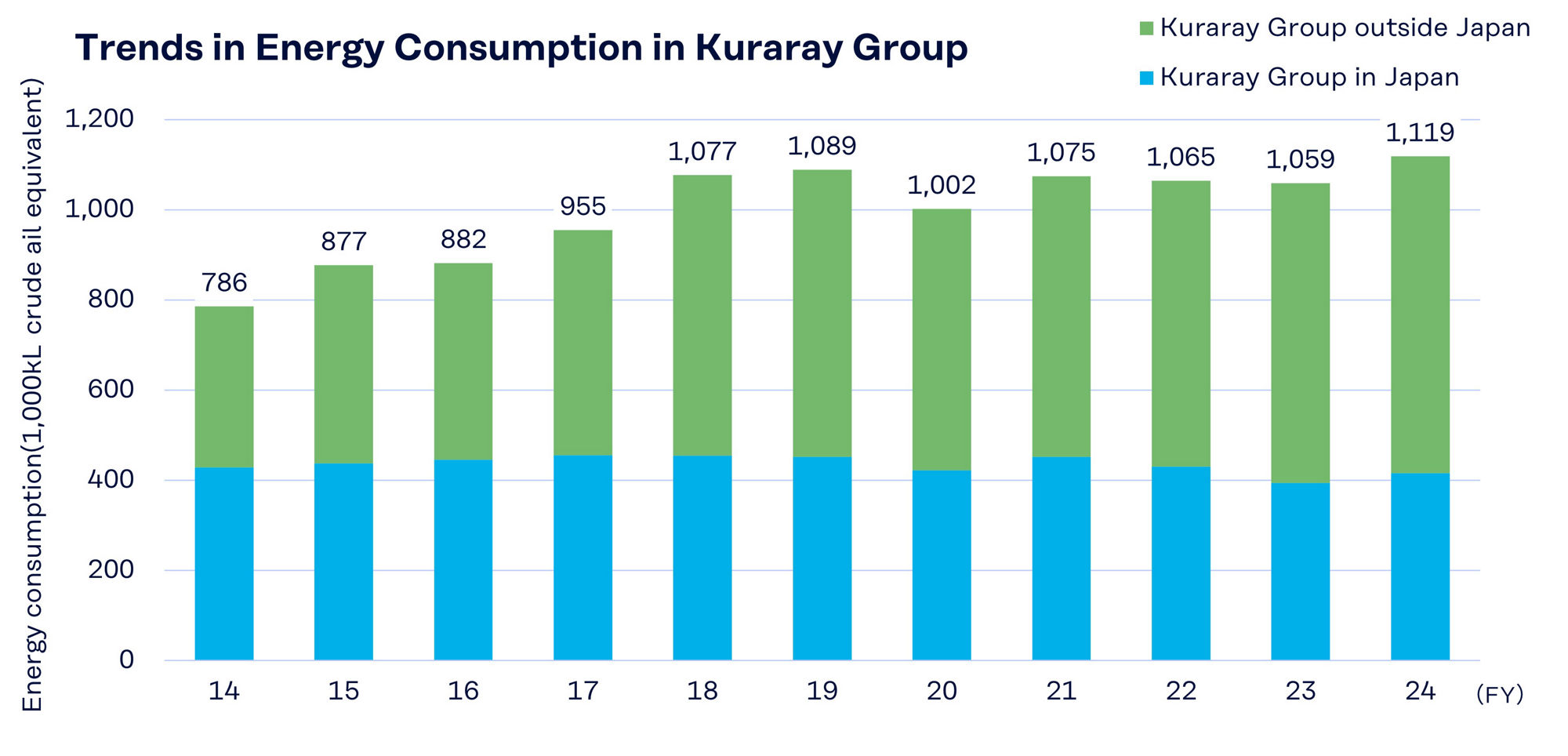
The sales intensity of energy consumption in the Kuraray Group, which was set as the target in the Sustainability Medium-Term Plan for Planet, reduced by 13.8% (improvement) in 2024 compared to 2019, far exceeding our target of the "Reduction (improvement) of 5% or more in 2026". Going forward, we will continue to work on further improvement of sales intensity through energy-saving activities that will contribute to the reduction of GHG emissions.
< Energy Consumption (Entire Kuraray Group) >
| Kuraray Group (Japan and Overseas) | 2019 | 2020 | 2021 | 2022 | 2023 | 2024 | |
|---|---|---|---|---|---|---|---|
| Energy consumption | crude oil equivalent, 1,000 kl | 1,089 | 1,002 | 1,075 | 1,065 | 1,059 | 1,119 |
| Japan | 452 | 422 | 452 | 430 | 394 | 416 | |
| Overseas | 637 | 580 | 623 | 635 | 665 | 703 | |
| Sales intensity of energy consumption (intensity of 2019 as 100) | Targets | Reduction of 5% or more in 2026 compared to 2019 | |||||
| Results | 100 | - | - | - | - | 86.6 (13.8% reduction) | |
【Notes】As a result of the change in months in each fiscal year, the environmental data and information contained in this report including graphs are as follows.
- Before fiscal 2013: Actuals in 12 months from April to March of the following year
- Fiscal 2014: Actuals for 9 months from April to December + Actuals for January to March 2014 (or estimated value) [Partially overlaps with fiscal 2013]
- After fiscal 2015 : Actuals for 12 months from January to December
GHG Emissions (Scope 3)
Mandated under the law by which businesses calculate and report Scope 1 and Scope 2 to the government, we report these figures to the government and publish the results mainly in the Kuraray Report and on the Kuraray Group’s website.
On the other hand, Scope 3, which means the GHG emissions based on the entire supply chain related to us other than Scope 1 and Scope 2, is indirect GHG emissions generated from the viewpoint of a life cycle such as raw material procurement, product distribution, product use and disposal as well as the direct emissions related to our business activities. In 2024, we have changed the calculation method for Scope 3 (Category 1) and expanded the scope of calculation to the entire Kuraray Group including overseas. Furthermore, we have greatly increased the number of raw materials, instead of major raw material only. This new calculation method, which uses emission factor applied for individual raw material (i.e., weight basis), has greatly improved the accuracy of our calculations, compared to the previous method by multiplying (i) purchase price and (ii) emission factor per amount which is defined by “industry category” (i.e., purchase price basis).
Furthermore, we have set a new goal for Category 1, which had the largest GHG emissions within Scope 3, aiming to reduce emissions by 37.5% by 2035 compared to 2021 levels.
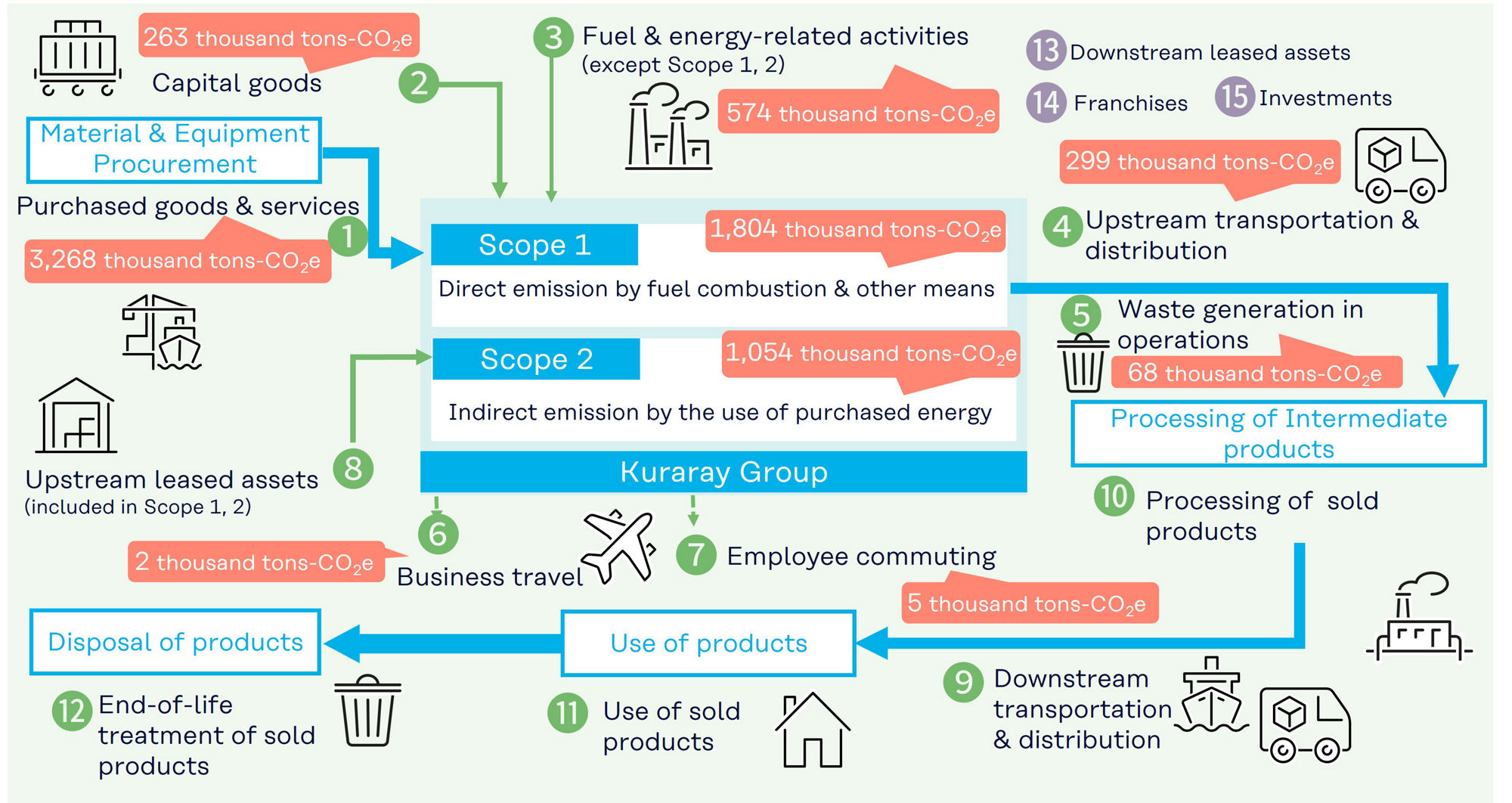
Conceptual Image of GHG Emission throughout the Kuraray Group Supply Chain in 2024
( (1) to (15) show categories of Scope 3)
Initiatives and Results
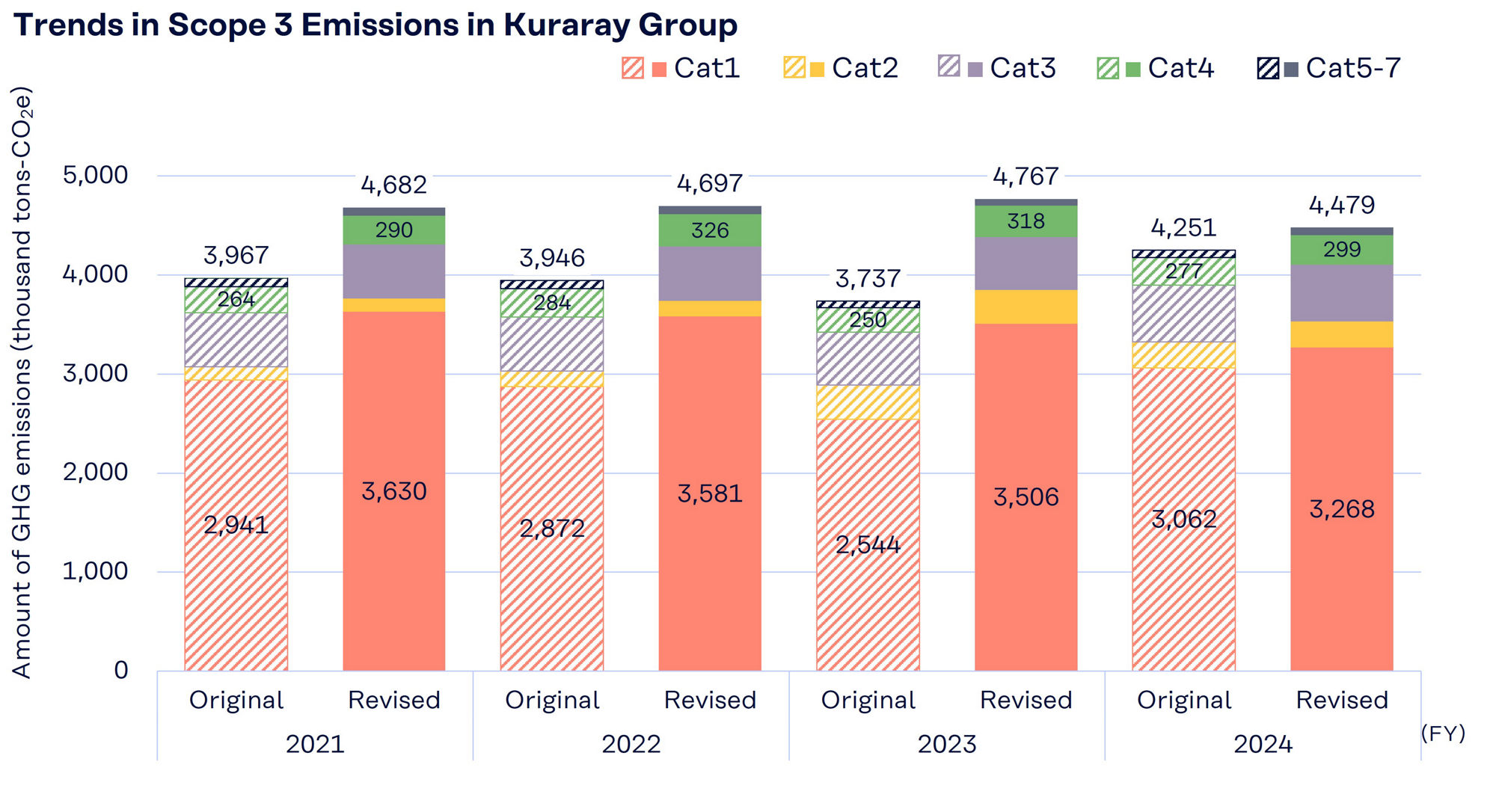
The Kuraray Group's Scope 3 (Category 1) emissions decreased by 6.8%, from 3,506 thousand tons-CO2e in 2023 to 3,268 thousand tons-CO2e in 2024 (decreased by 10.0% compared to 2021). We will continue to collaborate with our suppliers to reduce GHG emissions.
< Regarding the Revision of GHG Emissions >
In light of feedback received from a third-party organization during the preparation process for obtaining voluntary assurance of GHG emissions, we improved the accuracy of the underlying activity data and emission factors. We also expanded the scope of calculation. As a result of these improvements, starting in 2024, the Kuraray Group implemented retroactive revisions back to 2021, which served as the base year for its Group’s GHG emissions reduction targets. The results of the revision and details of the changes are shown in the table below.
Table: Breakdown of Revisions to Scope 3 Emissions
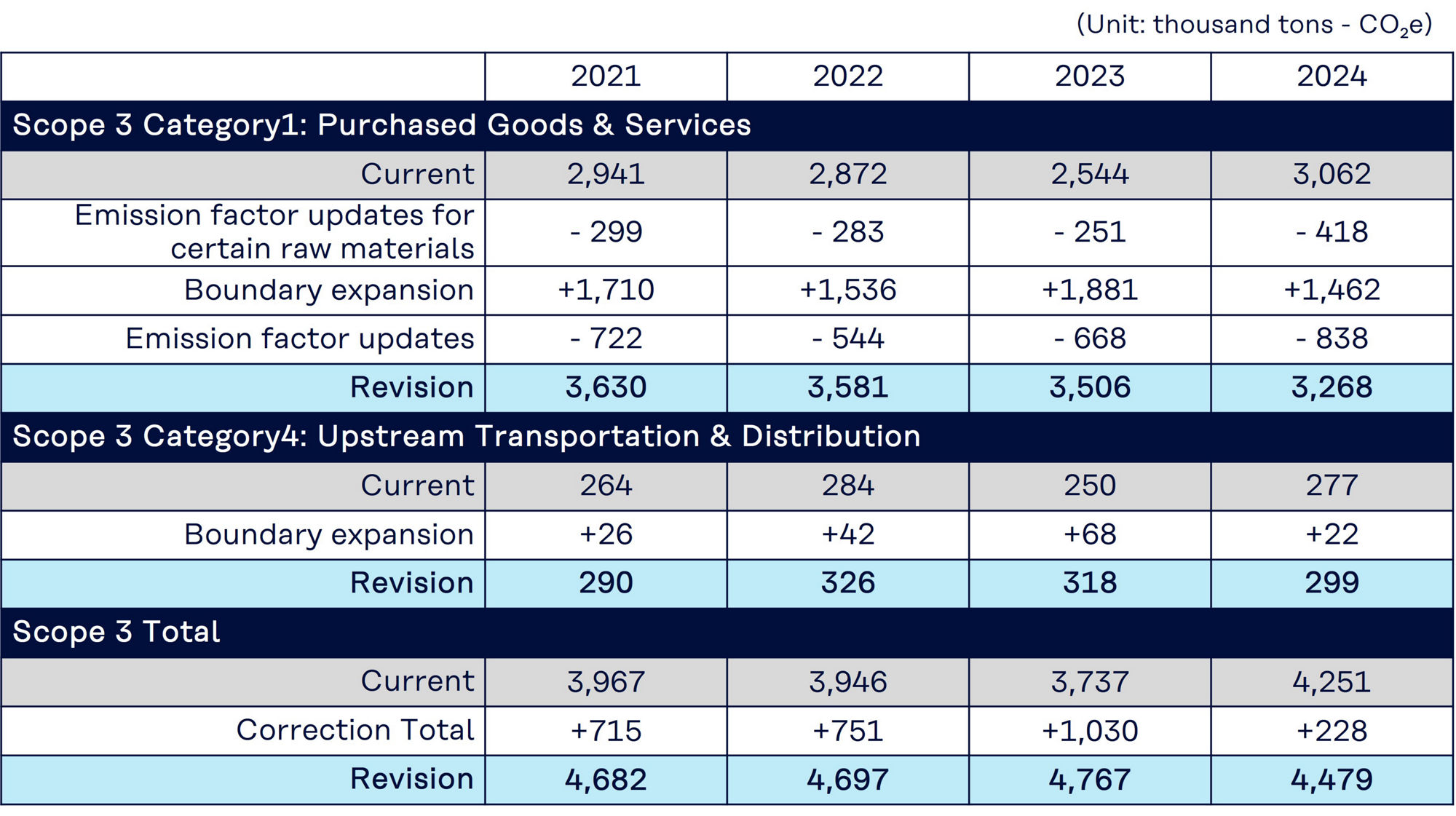
Key Revisions to Scope 3 Emissions (Categories 1 and 4)
・Review of emissions for certain raw materials (Decrease in Category 1)
・Expansion of purchased products and services included in the calculation (Increase in Category 1)
・Revision of emission factors (Decrease in Category 1)
・Revision of Category 4 emissions associated with the expansion of Category 1 calculation boundaries (Increase in Category 4)
<GHG emissions (Scope 3)*1>
(Unit : Thousand tons-CO2e)
| Category | 2021 | 2022 | 2023 | 2024 |
|---|---|---|---|---|
| 1.Purchased goods and services*2 | 3,630 | 3,581 | 3,506 | 3,268 |
| 2.Capital goods | 133 | 157 | 344 | 263 |
| 3.Fuel and energy related activities excluding Scope 1, 2 | 546 | 549 | 534 | 574 |
| 4.Transportation and distribution (upstream) | 290 | 326 | 318 | 299 |
| 5.Waste generated in operations | 78 | 78 | 58 | 68 |
| 6.Business travel | 1 | 2 | 2 | 2 |
| 7.Employee commuting | 4 | 4 | 5 | 5 |
| 8.Leased assets (upstream) | Emissions from offices, electrical appliances, and company cars are included in Scope 1, 2. | |||
| 9.Transportation and distribution (downstream) | Kuraray Group's products are mainly sold as intermediate materials for various applications, making it difficult to track and account for emissions from transportation, processing, and end-of-life treatment of sold products. Therefore, it is not feasible to reasonably calculate emissions for these categories, and they are excluded from the calculation. | |||
| 10.Processing of sold products | ||||
| 11.Use of sold products | ||||
| 12.End-of-life treatment of sold products | ||||
| 13.Leased assers (downstream) | Not applicable because of no leased assets to other company. | |||
| 14.Franchises | Not applicable as the company does not operate franchise system. | |||
| 15.Investments | Other company's stock was not held for investment purposes as reported in the Securities Report. | |||
| Total Scope 3 | 4,682 | 4,697 | 4,767 | 4,479 |
*
The GHG emissions shown on this page reflect revisions implemented in March 2026.
For GHG emissions before the revision, please refer here.
*1
Boundary includes Kuraray Co., Ltd. and 72 consolidated subsidiaries (73 consolidated subsidiaries in total, as of the end of December 2024).
*2
Emissions are calculated as “the amount of raw materials, supplies, and services purchased for production (by weight or monetary value) × the emission factor for each substance.” However, where the substance cannot be identified, emissions are calculated using “monetary value × an average emission factor.” Emission factors were sourced from Managed LCA Content ver. 2024 or the Emission Factor Database for Calculating GHG emissions of organizations through the Supply Chain, ver. 3.5.
<Example of Scope 3 GHG Emission Reduction Efforts (Reduction of Environmental Load during Product Transportation)>
We are working to reduce GHG emissions at the logistics stage, when transporting products to users. For example, to improve the efficiency of transportation by truck, we are consolidating the storage locations of products (warehouses) to ship products previously shipped from multiple locations from a single location. Through such large-lot transportation hubs, we are working so that products previously transported using multiple trucks can be loaded onto a single trailer. We also continue to pursue a modal shift, switching from trucks and other motor vehicles to modes of transportation with less environmental impact, such as freight trains and ships. In addition, in 2019 we submitted a declaration of voluntary activities in support of the White Logistics Movement being promoted by the Japanese government.
Carbon Footprint
Carbon Footprint of Products (CFP) Utilization
There is also a growing trend to calculate CO2 emissions across the entire supply chain for final products. In this context, customers are more frequently requested for the carbon footprint of Kuraray Group products. We established and started operating a globally unified CFP*1 calculation system in 2024. Our carbon footprint calculation method makes reference to major international standards*2 and guidelines for the chemical industry*3. The calculation range is defined as up to the factory gate (Cradle-to-gate). Additionally, in our system, the organization making calculations and the organization doing verification are separate divisions to ensure objectivity and reliability. We also use carbon footprint calculation value in the development of new environmentally friendly products that utilize recycled materials and biomass resources.
*1
The carbon footprint of products indicates greenhouse gas emissions emitted throughout the entire life-cycle of products or services, from raw material procurement to disposal and recycling, converted into CO2. In the materials industry, it is common to define the calculation range as cradle-to-gate.
*2
ISO14040:2006,ISO14044:2006,ISO14067:2018
*3
Japan Chemical Industry Association/ Guidelines for Calculating the Carbon Footprint of Products in the Chemical Industry (Published February 2023), Together for Sustainability The Product Carbon Footprint Guideline for the Chemical Industry (Version 2.1)
Response to TCFD Recommendations
In November 2020, Kuraray Group endorsed the recommendations of the Task Force on Climate-Related Financial Disclosure (TCFD*) in recognition of the importance of climate change mitigation as a critical issue to be addressed. We disclose the Kuraray Group’s initiatives on climate change in line with the four recommended disclosure contents under the TCFD framework (i.e., Governance, Strategy, Risk Management, Metrics and Targets).
*
TCFD has been established under Financial Stability Board (FSB) to review how to correspond to climate change disclosures and requirements from the financial sector.
Governance
Kuraray Group has established the Sustainability Committee, chaired by the President, to deliberate on, report, and monitor the progress of various initiatives to sustainability issues, including climate change. Under the Sustainability Committee, we have established several project teams to implement the global measures outlined in the Sustainability Medium-Term Plan and to promote the steady execution of each project.
Topics determines as material at Sustainability Committee are proposed to or reported to the Board of Directors, and the opinions from them are reflected in our initiatives to addressing sustainability issues.
Strategy
Kuraray Group has selected the risks and opportunities for events assuming in the transition to a low-carbon society and for physical events caused by climate change as shown in Table 1 below.
Table 1: Risks and Opportunities by Climate Change in Kuraray Group
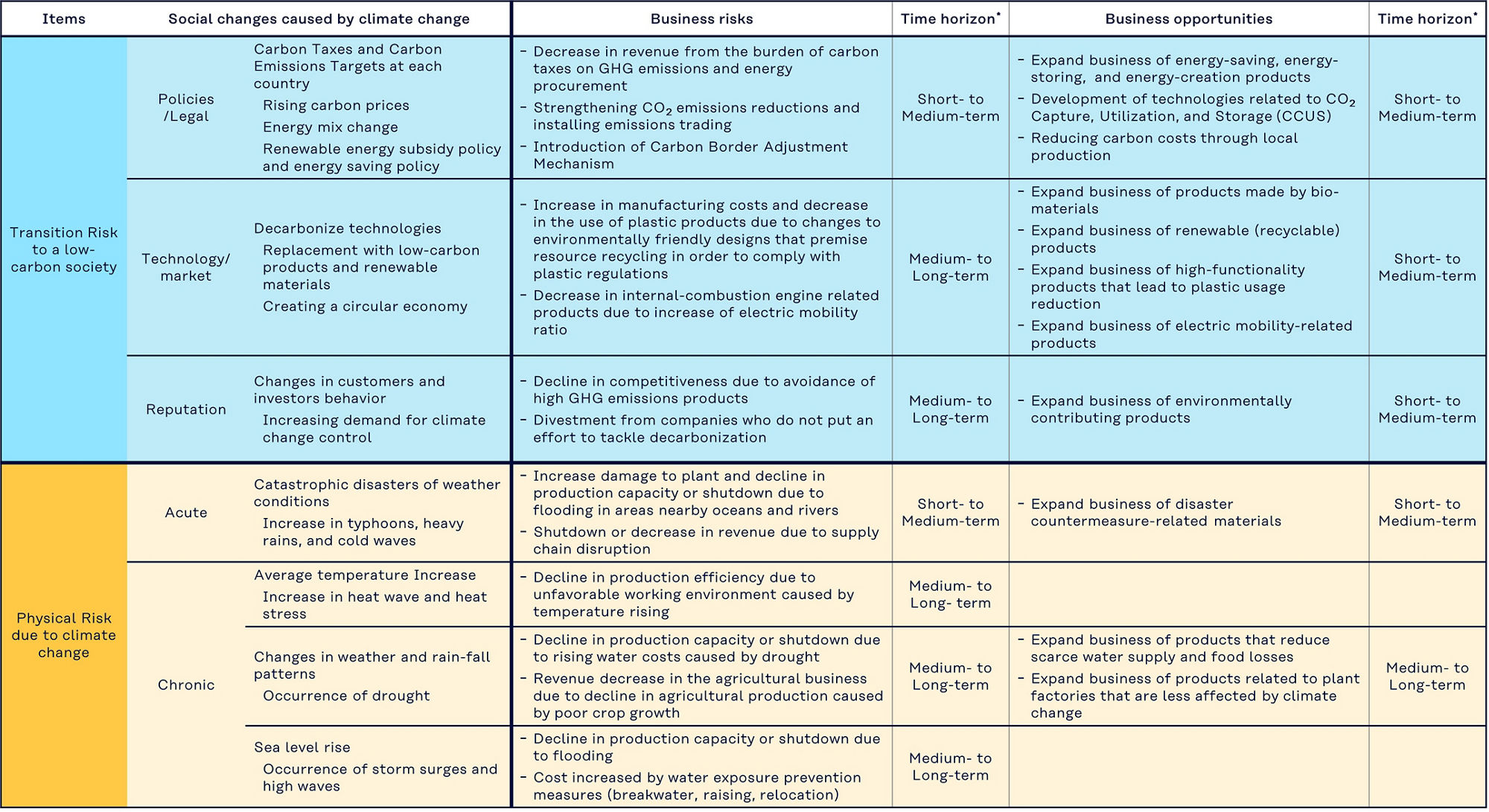
*Time horizon (Short : < 1 year Medium: 1-5 years Long: > 5 years)
Based on the risks and opportunities identified for Kuraray Group in Table 1, we conducted an analysis using the below 2℃ scenario (including the 1.5℃ scenario), in which the shift to a low-carbon society accelerates, as well as the 4℃ scenario, in which climate change continues to progress. The results of this analysis and the potential impacts on the Kuraray Group’s businesses are summarized in Table 2.
【Conditions on scenario analysis】
● Base year: FY2021, Calculation Target Year: FY2035
● Referenced external data:
- World Energy Outlook 2024 (IEA: International Energy Agency)
- Working on a warmer planet (ILO: International Labour Organization)
- Climate Impact (Weathernews Inc.)
Table 2: Business Impact of the Kuraray Group’s Major Risks and Opportunities in Climate Change Scenarios
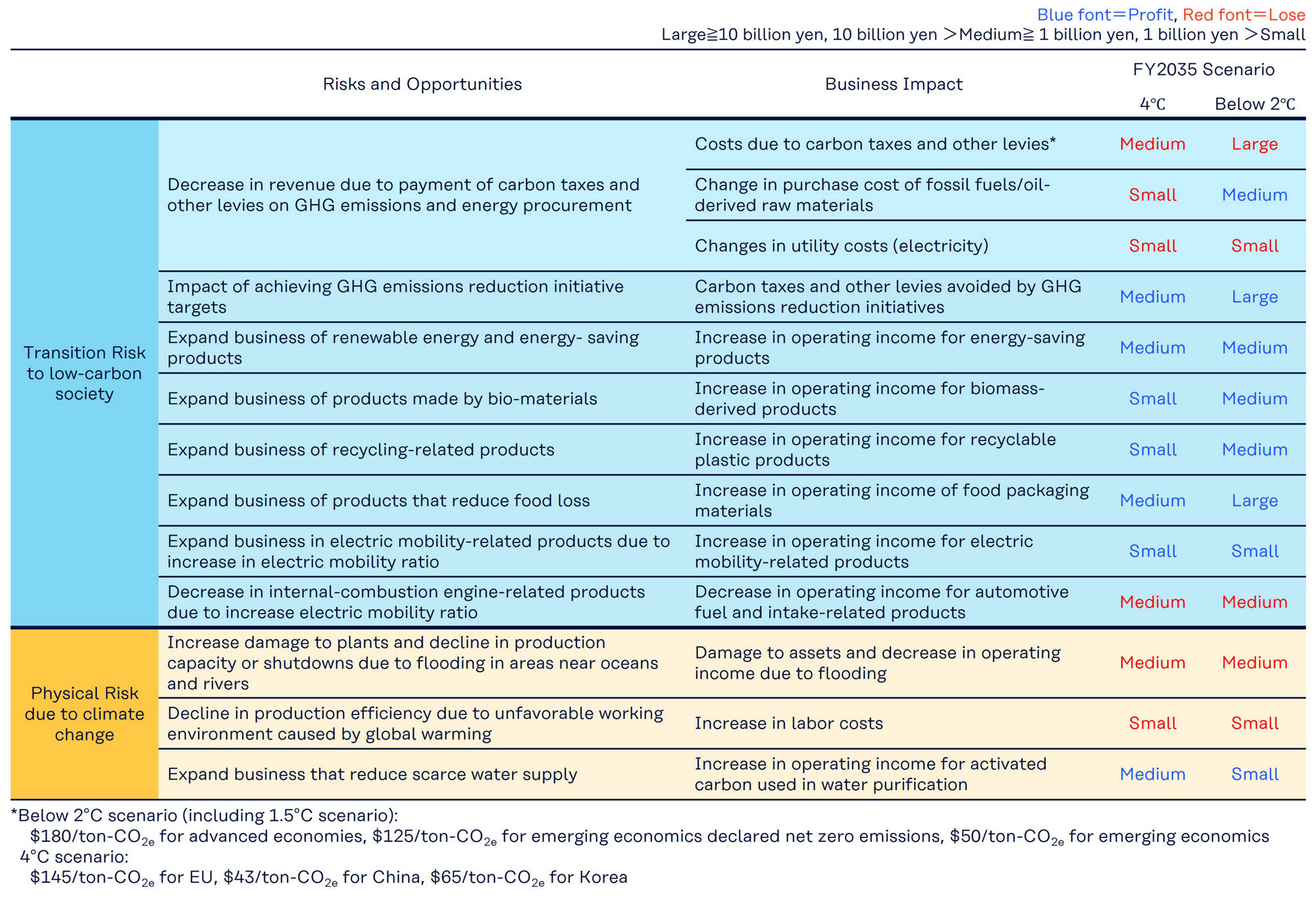
In terms of “Transition Risk” to a low‑carbon society, our analysis indicates that carbon taxes and other levies on GHG emissions and energy procurement under the below 2℃ scenario could have a significant impact. Even after completing all planned GHG reduction measures by 2035, operating costs could still increase by approximately JPY26 billion due to these carbon taxes and other levies. Under the current Medium-Term Management Plan “PASSION 2026,” we have introduced an internal carbon pricing system and recognize the amount of levy, etc. on GHG emissions, and we are committed to reducing GHG emissions, improving energy efficiency, and expanding our operations that limit GHG emissions. Furthermore, PASSION 2026 highlights “Sustainability as an Opportunity” as one of three strategic challenges, and we are advancing a range of initiatives. Among these efforts, we have developed the Kuraray PSA system, based on the Portfolio Sustainability Assessment (“PSA”) methodology established by WBCSD*, which ensures a high level of objectivity and transparency in evaluating product portfolios. Through this system, we aim to expand products that contribute to the natural and living environment and to promote the incorporation of the market value created by these environmentally beneficial products into the pricing of our products and services.
Regarding “Physical Risks” by climate change, we anticipate potential impacts on our operations due to flooding. In response, we implement safety measures to protect human life and local communities, while striving to maintain business continuity or achieve rapid recovery. In addition, we have implemented measures to compensate for property damages caused by flooding, thereby reducing the impact of such events.
Given that responding to climate change is a medium- to long‑term, we will continue to review existing measures and consider new initiatives as appropriate times.
*
WBCSD: World Business Council for Sustainable Development
Risk Management
Kuraray Group conducts risk management for both “Mitigation” and “Adaptation” to the major risks listed in Table 2.
In order to "mitigate" “Transition Risks” to a low-carbon society, we are reducing GHG emissions and expanding sales of products that contribute to the environment. Progress on these initiatives is confirmed by the Sustainability Committee.
For “Adaptation” measures addressing “Physical Risks” by climate change, each organization conducts an annual self-assessments of risks from the perspective of disaster preparedness and business continuity. The results of these assessments are discussed by the Risk Management and Compliance Committee (chaired by the director in charge of the Corporate Sustainability Division) which identifies significant risks. These are then designated by the President as management risks, and responsible officers are appointed to oversee the implementation of countermeasures.
Metrics and Targets
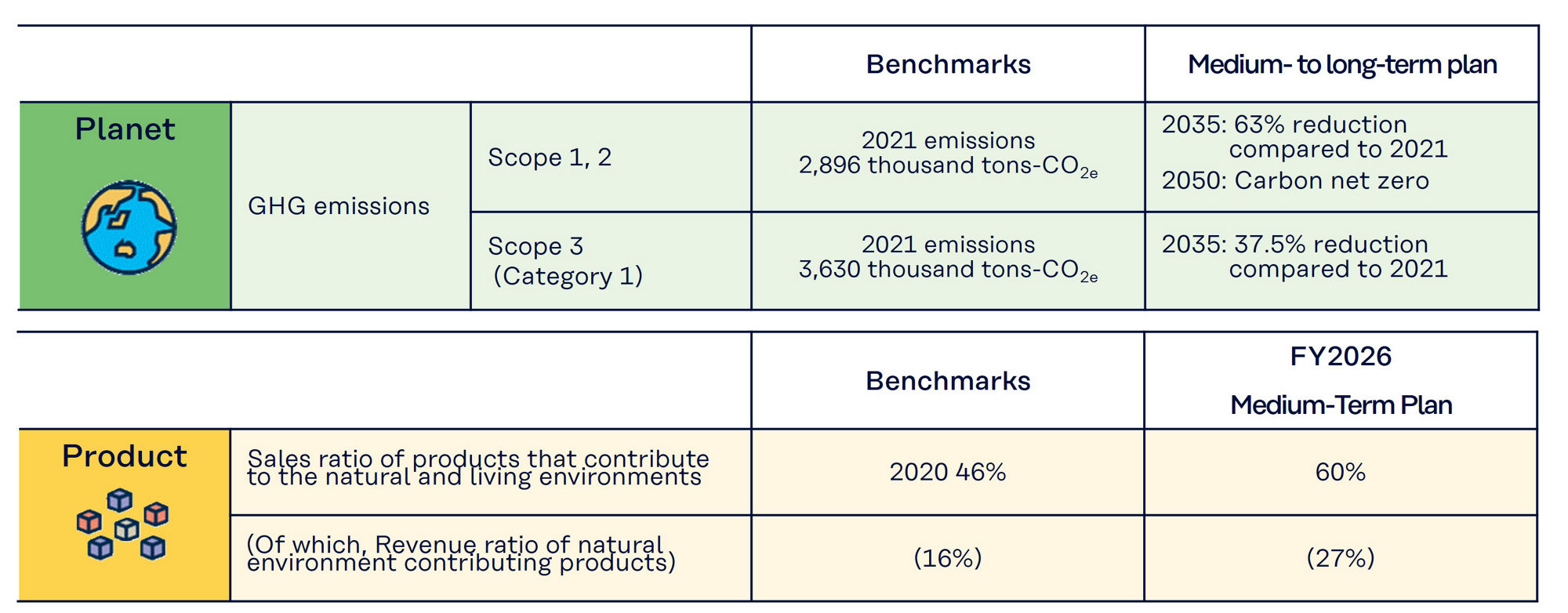
In the Sustainability Medium-Term Plan, Kuraray Group has set targets for reducing GHG emissions related to climate change and increasing sales of products that contribute to the natural and living environment, as shown in Table 3. Kuraray Group has set a goal of achieving net zero carbon emissions by 2050 and has set targets to reduce Scope 1 and 2 emissions by 63% and Scope 3 (Category 1) emissions by 37.5% by 2035 compared to 2021 levels.
Table 3: Measures and Targets Related to Climate Change in the Sustainability Medium-Term Plan
Information aligned with climate-related indicator categories is provided below.
| (1) GHG emissions | > GHG Scope 1 and 2 > GHG Scope 3 |
|---|---|
| (2) Transition risks | > Table 1: Risks and Opportunities by Climate Change in Kuraray Group > Table 2: Business Impact of the Kuraray Group’s Major Risks and Opportunities in Climate Change Scenarios > Kuraray PSA System |
| (3) Physical risks | |
| (4) Climate-related opportunities | |
| (5) Capital deployment | JPY 80 billion capital investment planned by 2030 to reduce GHG emissions |
| (6) Internal Carbon Prices | > Internal Carbon Pricing (ICP) |
| (7) Remuneration | > Officers’ Remuneration System Sustainability-related indicators are reflected in executive compensation |
Internal Carbon Pricing (ICP)
The Kuraray Group uses ICP to incentivize energy saving, identify revenue opportunities and risks, and inform investment decision making, aiming to realize a low-carbon society.
The Kuraray Group's ICP
| Internal carbon price | JPY 10,000/t-CO2e (calculated using internal exchange rates overseas) |
|---|---|
| Starting Date | January, 2022 |
| Scope | Capital investment entailing a change in CO2 emissions |
| Method of application | The costs of changes in CO2 emissions will be calculated using the internal carbon price and used as a criterion for investment decisions |