Updated on May 29, 2026 Occupational Safety and Process Safety
- Safety Activity Management
- Occupational Safety
- Process Safety
Kuraray’s Approach to Safety
In the Kuraray Group’s business activities, safety is the cornerstone, an absolute requirement that forms the basis for all activities. It is evident that realizing workplaces where people can safely work at ease without accidents is a critical theme both in maintaining a stable supply of products and in maintaining society’s trust.
With these concepts in mind, the Kuraray Group has established and implemented a safety management system to undertake various activities. A number of initiatives are being promoted to raise the safety awareness of our employees and to have safety behavior and confirmations established as common practice at work.
At each workplace, we uncover risks related to occupational safety and process safety, conduct thorough risk assessment activities, promote fundamental equipment safety measures, and prevent process accidents and occupational injuries. Additionally, to prepare for the event of an accident or injury, we are carrying out training to minimize damage, sharing information on cases of accidents and lessons learned, and horizontally deploying countermeasures.
Guiding Principles for Ensuring Safety
Safety is the Cornerstone of Everything We Do
Action Courses for Ensuring Safety (FY2026)
- Practice Safety First, Production (Construction, R&D) Second
- Practice “Prediction Hazards”, “Make Sure” the Safety Comes Before Taking Action, and “Confirm” If the Action Results are What You Expect
- Every Individual and Every Department (Every Leader/Manager, Every Team) Shall Be Aware of Safety as “Their Responsibility” and Act Appropriately
Safety Activity Management
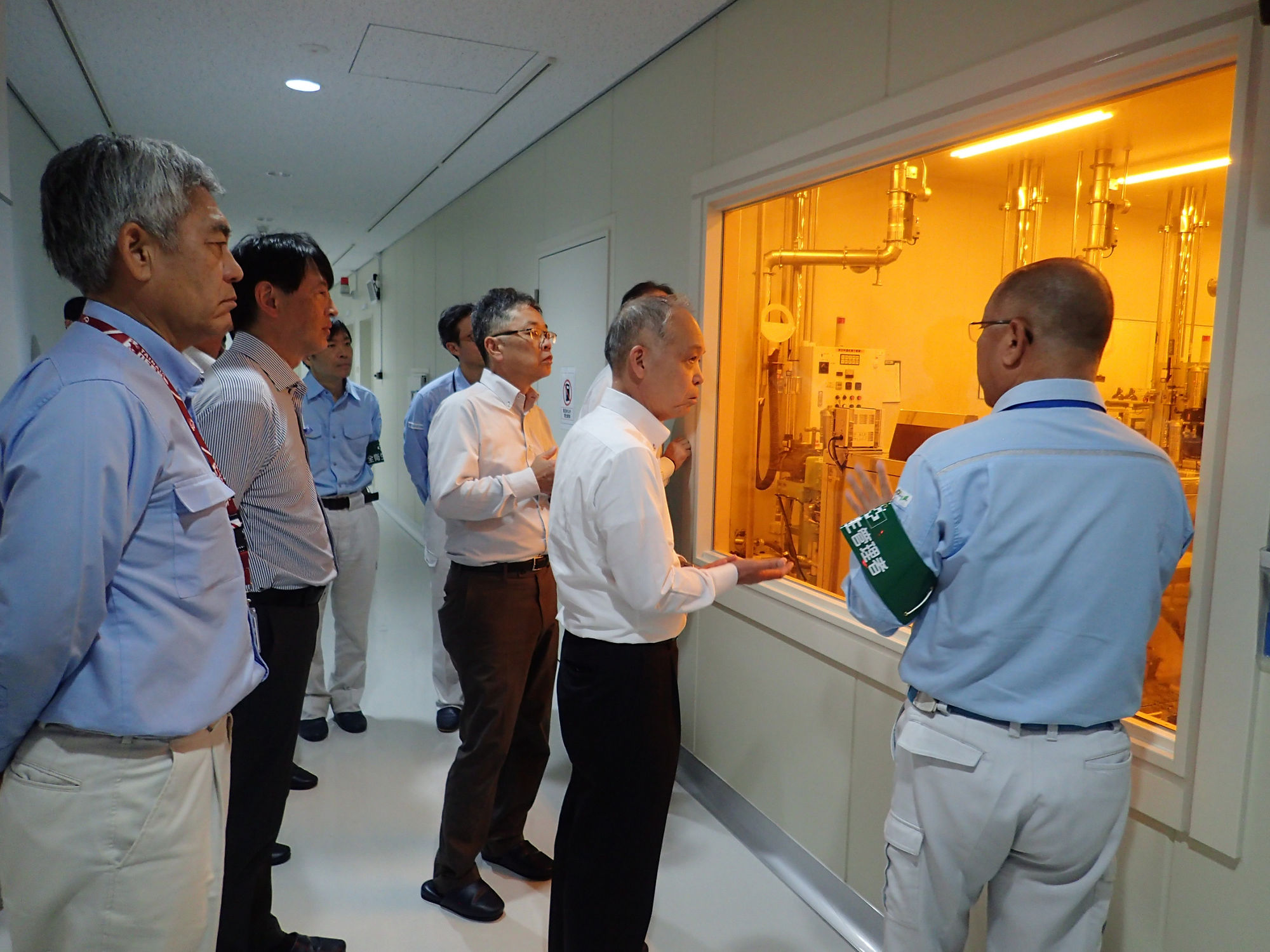
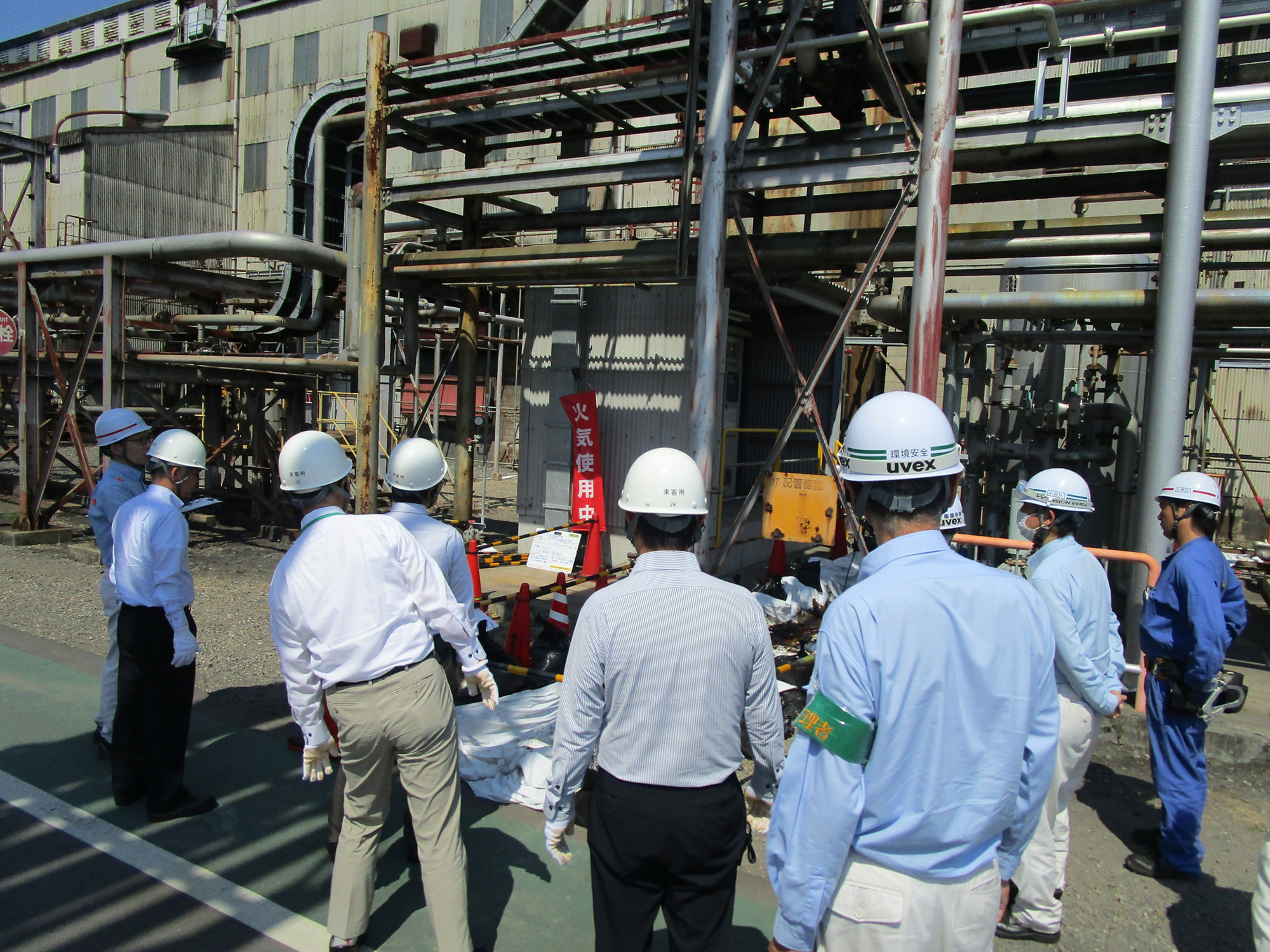
In accordance with the Kuraray Group Safety Activity Management Rule, we develop a safety plan every year and implements it to ensure occupational safety and process safety. At the Safety Promotion Committee attended by the President and executives in charge, we make an overall assessment and have a discussion on safety activity performances of the current year and formulate safety policy for the following year. This policy is reflected in action plans of each plant and department and implemented accordingly. Regarding the status of activities, safety representatives from headquarters, including executives in charge of safety, visit all Group production sites in Japan twice a year to examine their management of implementation progress. For overseas Group companies, safety staff members from headquarters visit local sites once every three years to confirm their status as well as conduct verification through remote conferencing. We perform an overall assessment of results based on the issues found through the surveys conducted at each plant, the safety results for that year, and other factors. We incorporate this assessment into the formulation of company-wide policies for the next year, thereby operating a management system for safe operations.
Priority Activities for Occupational Safety, Process Safety
Priority Activity Performance in 2025
| Activity | Performance |
|---|---|
| Practice of basic action for safety (prediction hazards, confirmation, etc.) on actual workplaces | We believe that our efforts to promote and embed the practices of “Prediction Hazards” and “Confirmation” have produced a certain level of positive results. However, the degree of practice in the workplace varies. Cases of accidents and injuries continue to occur due to insufficient practice of basic safety actions at actual workplaces and inadequate compliance with basic rules. Continuous efforts are required to ensure that all employees comply with rules and perform basic safety actions in every situation. |
| Understanding / Identifying risks (Occupational Safety and Process Safety) in actual workplaces and considering countermeasures from the facilities and management aspects | We have identified and improved risks in actual workplaces through activities such as “5S” to better organize workplaces, sharing "awareness" discovered in the workplace, and reviewing the operation standards. However, risks that have become commonplace and unnoticed still remain. Due to the assumption that ‘such things will not happen,’ these risks are often excluded from consideration, leading to safety measures that rely heavily on human attention and skill, resulting in accidents and injuries. Moving forward, it is necessary to continue to identify serious risks that may lurk at workplace and implement safety measures from both the equipment and management perspectives. |
| Ensuring safety of construction and maintenance works | To ensure safe construction and maintenance work, we review systems and regulations and provide training. In particular, through the implementation of advance safety measures to provide safe workplaces, the conduct of on-site, in-situ tripartite checks at work sites, and appropriate information sharing, progress has been made in creating safe work environments. As in the previous year, there were no cases in which construction workers were injured due to the inadequate provision of safe workplaces. Going forward, we wil continue to maintain these efforts to ensure that the rules for ensuring safety and reliably operated and practiced on-site. |
| Improving the level of process safety management at overseas chemical plants | We have continued to conduct safety audits of overseas chemical plants, which were initiated in 2019. Through the continuous operation of the system introduced in 2023, such as safety policy briefing meetings and accident reporting meetings, we have improved communication with our overseas groups. In addition, the global team of experts in Process Safety Management (PSM), consisting of cross-organizational members, continued on-site audits of overseas chemical plants to assess the implementation status of process safety management. They identified several issues and are working on addressing them. We will continue to assess the current status of the process safety management system and identify issues in order to further enhance the level of process safety management. |
Priority Activity Plan for 2026
| Kuraray Group in Japan | ・Practice of Basic Actions for Safety (prediction hazards, confirmation, etc.) on Actual Workplaces, and Compliance with Basic Safety Rules ・Usage of Occupational Injury and Process Accident/Trouble Case Studies ・Ensure safety in Maintenance and Restoration Work Performed by Production Departments, etc. ・Ensuring Safety in Outsourced Works, etc. ・Strengthening Communication to Increase Workplaces’/Departments’ Safety Awareness |
| Kuraray Group outside Japan | ・Reduction of Occupational Injuries ・Strengthening of Process Safety Management System ・Global Integrated Management of Safety Activities |
Risk assessment of new business, capital investment, etc.
The Kuraray Group has in place and operates a system that carries out prior surveys and risk assessment regarding process safety and occupational safety and health of new projects and capital investments in and outside Japan through the functions of the Technical Evaluation Committee, the Technology Review Meeting and the Safety and Environment Examination to verify that safety measures and environment measures are sufficiently considered before moving to the next step. In addition, changes in raw materials, facilities, operating conditions and the organization as well as personnel transfer in line with the organizational change (supervisors, administrators, persons in charge, etc.) are implemented after taking measures required upon assessing risks as part of the change control process. The Kuraray Group ensures safety in introducing new business and facilities by steadily implementing these initiatives.
Safety Audits for Chemical Plants outside Japan
We initiated safety audits for chemical plants outside Japan in 2019 and we have continued to grasp process safety risks and review and strengthen safety measures to strive the safety and stable operation of the Group outside Japan. In 2025, safety audits were conducted on-site at our plants, four in the U.S. and two in Asia. In addition to following up on the status of responses to issues identified in the previous year’s safety audit, we check on the progress of identifying the causes of process accidents and troubles, as well as the progress of countermeasures to improve the safety level at the site. In 2022, we formed a global in-house team of experts in process safety management (PSM) and started our activities. In 2025, we conducted on-site audits of the safety management practices at two plants in the U.S. and two plants in Europe and are addressing the identified issues. We will continue these audits by the expert team to confirm the current status of safety management systems at overseas chemical plants, identify issues, and improve the safety management level.
Occupational Safety
Realizing that the safety and health of its employees are the basis of business activities, the Kuraray Group aims to create safe and injure free workplaces by striving to enhance the safety level of each of its employees and organizations. Through Group-wide policies and activity items including Guiding Principles and Action Courses for Ensuring Safety, policies and plans are thoughtfully developed and put into practice according to each plant’s and division’s situations and their unique ideas. Safety activities and their challenges are discussed among workers and employers at the Safety and Health Committee held by each of the domestic plants and factories every month, aiming to realize workplaces where people can safely work at ease without accidents.
We continuously promote activities to reduce serious occupational injuries caused by equipment deficiencies through risk assessment activities and essential safety measures for equipment. However, many occupational injuries caused by individuals’ unconsidered or unconscious behavior have still occurred. Therefore, education to raise the sensitivity of each employee to risks has been promoted to eliminate such occupational injuries.
【2025 Results】
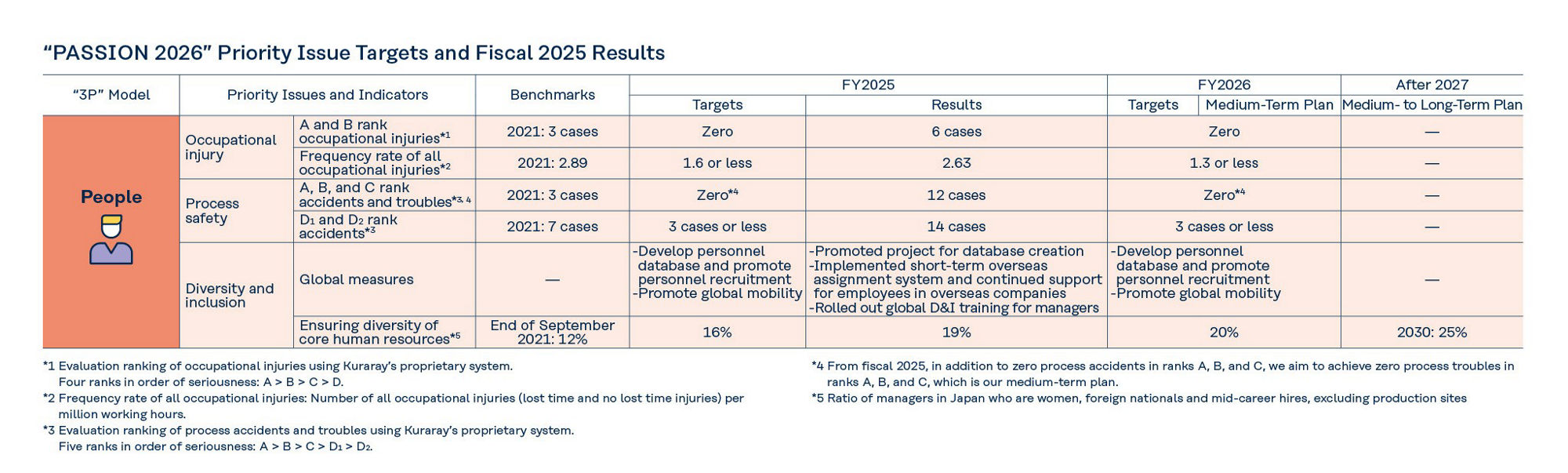
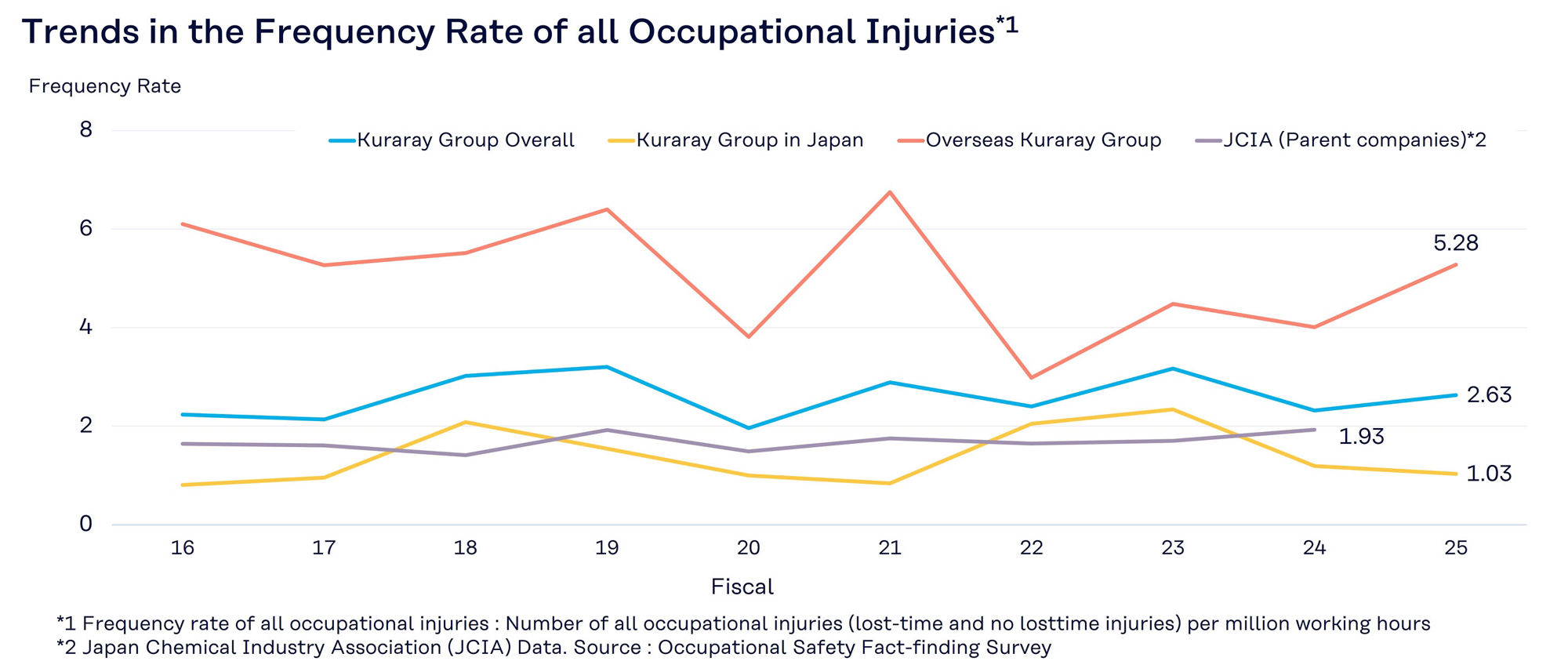
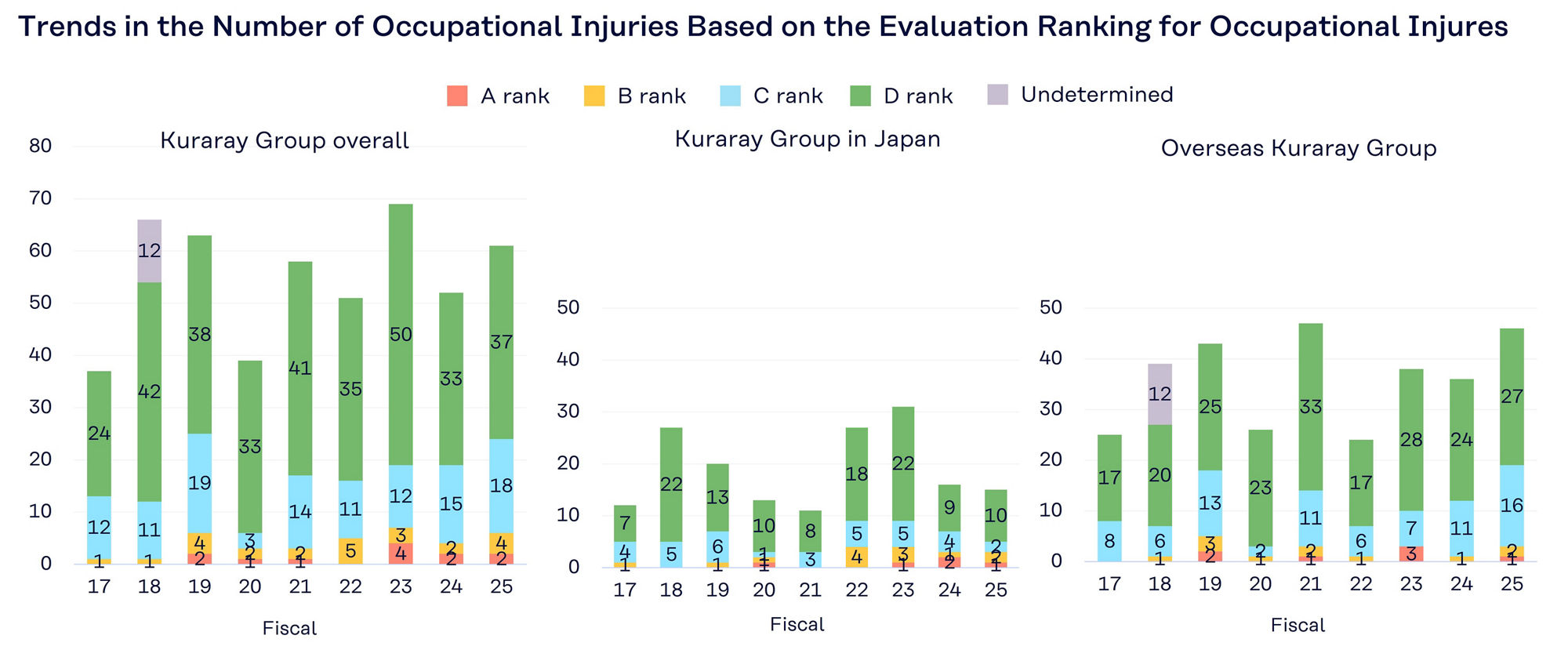
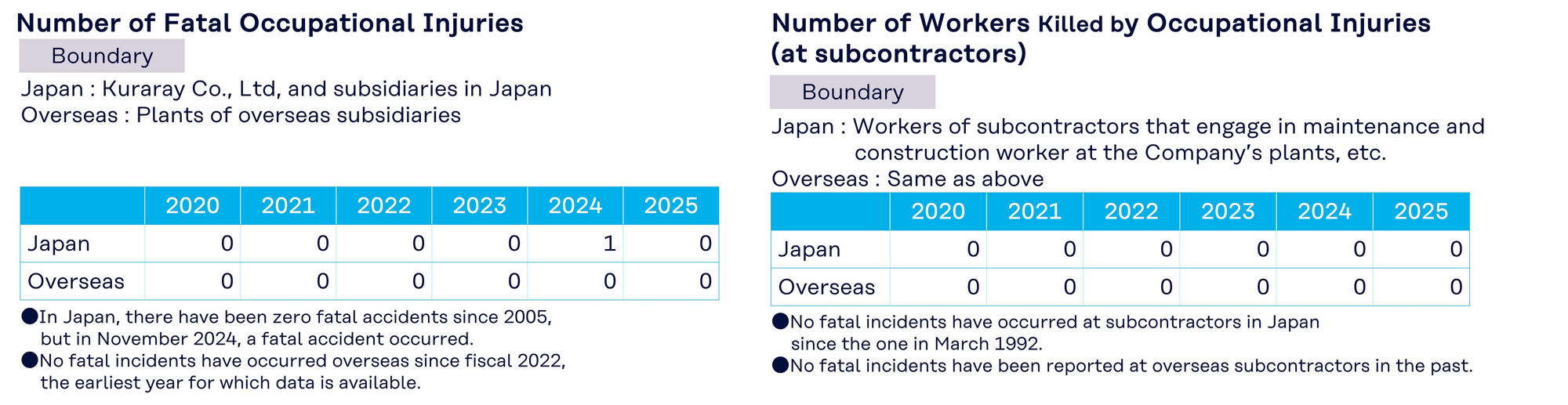
The frequency rate of all occupational injuries for the entire Kuraray Group in 2025 was 2.63 (1.03 for the Japan group and 5.28 in for the overseas group), falling short of our target rate of 1.8 or less. The Japan group failed to achieve our target rate of 0.6 or less, but the figure was slightly improved from the previous year. The overseas group recorded a significant deterioration from previous year in the frequency rate of all occupational injuries and failed to achieve its target rate was 3.2 or less. The Kuraray Group has introduced a unique index to assess the severity of occupational injuries using a four-level ranking, from A to D. Our target is to achieve zero occurrence of the more severe A and B rank occupational injuries. There was a total of six A and B rank occupational injuries (serious cases) across the Group in 2025 (one A rank and two B rank injuries in Japan, and one A rank and two B rank injuries overseas), a result that fell short of the target. Of the A and B rank injuries that occurred, three cases involved employees being caught in or entangled in machinery, two cases involved contact with high-temperature objects, and one involved a fall from forklift during operation. These cases were caused by safety measures that relied excessively on human attention and skill, as well as by failures to identify potential risks, and corrective actions are currently being implemented. At the same time, we are steadily advancing initiatives to address the issues identified through the fatal occupational injury that occurred in 2024, and we will continue our efforts to achieve safe, injury-free workplaces.
Evaluation and Classification of Occupational Injuries
Generally, categories based on the severity of injuries, including fatal injuries, lost time injuries and non-lost time injuries, are used as an indicator for occupational injuries. In particular, the frequency rate of lost time injuries is often used to assess the level of or establish a target for organizational safety. However, actual safety levels may deviate from the results of this assessment method for the following reasons:
(1) The severity of injuries is unpredictable in many cases.
(2) The occurrence factors of injuries are not taken into consideration.
(3) (When it is applied to global management) criteria for determining the degree of injuries depends on the country.
In 2012, we therefore have established a proprietary evaluation and classification of occupational injuries by subtracting unpredictable factors and adding an assessment of occurrence factors. This quantifies not the actual severity of injuries but the potential severity of injuries that could have been caused by occupational injuries. Moreover, faults that caused such injuries are divided into human, equipment and managerial, rated numerically, and added to the potential severity of injury to determine the ranking from A, B, C to D.
As a result, the number of severe occupational injuries ranked A and B serves as an indicator for evaluating the level of organizational safety.
Process Safety
At the Kuraray Group, we consider it our major responsibility to prevent the occurrence of explosions or fires, leakage of hazardous materials and other accidents that could have an immense impact on society, as well as to minimize any damage in the event of such occurrence. For this purpose, we have continuously undertaken activities such as risk assessment related to process safety, and we strive to take earthquake and tsunami countermeasures for buildings and plants, and organize the safety management system for facilities.
After accidents occurred at the other companies in the 2010s, we are paying particular attention to the risk assessment of unusual tasks and situations such as the starting and ceasing of an operation, a power and water outage, and an emergency shut-down. Moreover, we also extract various risks that may arise in the event of a failure of safety equipment or incompliance with standard procedures or rules and consider countermeasures.
Additionally, we are also working to diverse equipment and management systems and develop human resources to respond quickly to an unusual situation before an accident occurs through educating members to raise their sensitivity to risks in order to detect any sign of abnormalities and to clarify standards to determine an unusual situation.
Employees are regularly trained through on-site drills on various situations including the night time, holidays, when managerial personnel are absent and situations that occur without notice, in a drill using an external facility or a joint drill with a local fire department. We are engaging in initiatives for receiving evaluations from an external organization about our safety-related foundations and culture, and we aim to be a safe company that does not suffer any accidents by operating the PDCA cycle with a thorough understanding of which areas need further reinforcement.
In the event of a significant accident, an Emergency Command Center led by President is ready to be established to promptly respond to the situation and provide on-site support. Media training is also provided to key managerial personnel in charge of public relations to enable them to appropriately provide information to the regional community and media in case of such an accident.
【2025 Results】
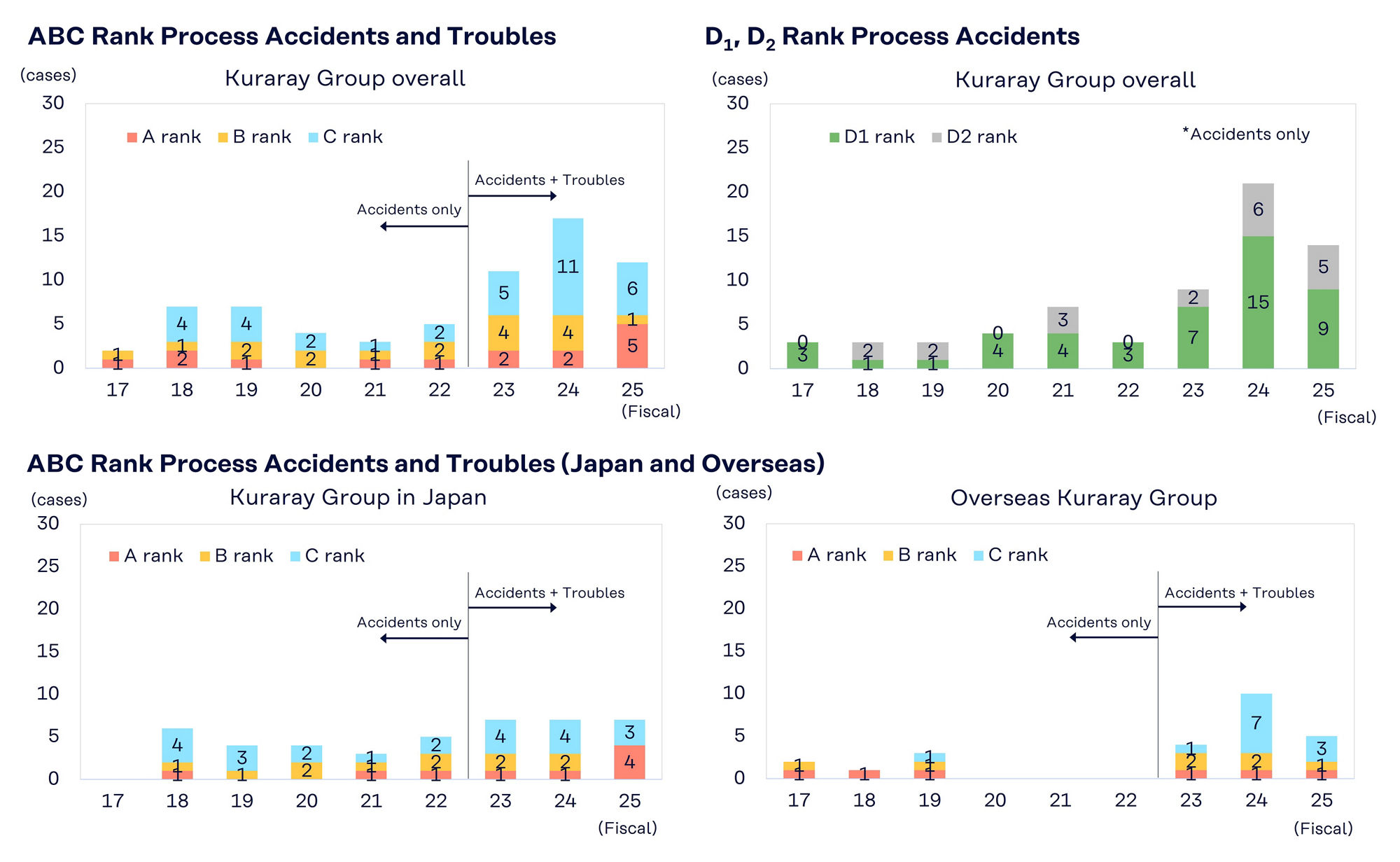
In 2025, the Group-wide total of A, B, or C rank process accidents and process troubles, which are classified as relatively serious process accidents and process troubles based on the Kuraray Group’s in-house evaluation criteria, was twelve cases. This total comprised seven cases in the domestic Group (A rank: two cases of leakage and one fire, and one minor explosion; C rank: two cases of leakage and one case of equipment damage caused by increased pressure) and five cases in the overseas Group (A rank: one fire; B rank: one case of leakage; C rank: one case of leakage and two fires). Although this represented a decrease compared with the previous (seventeen cases), we thus did not meet our target of zero cases. In 2025, the Group-wide total of D1 and D2 rank accidents, which are cases classed as minor by our in-house standards, such as leakage of a very small amount of hazardous material and fires or ignition that are quickly put out, was fourteen. These included fourteen cases in the domestic Group (D1 rank: nine cases of leakage; D2 rank: five cases of leakage), with no cases in the overseas Group. This result fell short of our target of three or less although this figure decreased from previous year (twenty-one cases). As in the previous year, the main causes included insufficient checks before and after operations, such as forgetting to close valves, overlooking risks due to the landscape and normalization of on-site risks, and aging deterioration of equipment. We are continuing to implement measures to address these issues. Going forward, we will aim to achieve zero relatively serious process accidents and troubles, while also working to reduce the occurrence of minor cases by further strengthening on-site risk identification and preventive measures.
The Kuraray Group has been working to reduce process accident across the Group, with longstanding goal of zero ABC-ranked process accidents. From 2025, we have expanded this goal to also include zero ABC-ranked process troubles, and we are strengthening our efforts to further reduce both process accidents and troubles across the entire Kuraray Group.
While continuing the safety audits for overseas chemical plants that began in 2019, we formed a new global experts’ team for Process Safety Management (PSM) in 2022 and commenced its activities. This expert team, comprising cross-organizational members, aim to identify and assess issues, share expertise and insights for improvement, and horizontally deploy good practices across the Kuraray Group. In 2025, on-site audits were conducted to assess the implementation status of safety management at two locations in the U.S. and two locations in Europe. Several issues were identified through these audits, and corrective actions are currently being implemented. We will continue to thoroughly prevent the recurrence of process accidents at our overseas chemical plants by maintaining PSM audits and addressing issues identified through these audits and other means to improve our process safety management level.
Investigation and Prevention Measures Concerning Fire Incident at U.S. Plant
In December 2023, we announced the results of an investigation into a fire incident that occurred in 2018 at a plant belonging to a subsidiary in the United States. The investigation examined the incident from three perspectives—technology, governance, and response to lawsuits—and put together recurrence prevention strategies in each of these areas, which are now steadily being implemented. Additionally, we compiled a Group-wide set of measures based on the results of the investigation and informed by the recurrence prevention measures, and are rolling these out horizontally across the Group through on-site safety checks and other activities. By extending these initiatives to Group companies in Japan and overseas, we are aiming to further reinforce safety and risk management frameworks across the Kuraray Group.
Kuraray’s Proprietary Evaluation Method for Process Accidents and Troubles
Up to now, the Kuraray Group set targets for process accidents by evaluating safety performance based on the number of accidents, regardless of their severity, including incidents such as fires, explosions, and leaks that require official reports to supervisory authorities. However, this method was insufficient for setting the appropriate targets according to risk. Accordingly, we tried to classify process accidents according to their size and include them in the evaluation rank. However, most of the process accidents that occurred within the Kuraray Group were classified as the lowest rank according to the generally used classification method (the CCPS method, etc.), which did not meet our objectives. In 2020, therefore, we developed a proprietary evaluation method. This evaluation method classifies the scale of an accident by the type of accident such as fire, explosion, leakage, etc., and determines rank by considering the presence or absence of human damage and factors that led to the occurrence of the accident, etc. The method also enables further sorting and classification of accidents with the lowest rank in the CCPS classification. In this way, we aim to eliminate major accidents that fall into the A, B, or C rank as “accidents that should never occur.” For minor accidents classified as D1 or D2 rank, including slight leakage of hazardous materials, fire, and ignitions extinguished by initial firefighting, etc., we set targets for each type of “accident that requires a reduction in the frequency of occurrence of risk,” and use these targets to carry out appropriate safety risk reduction activities in accordance with risk. From 2021, we have set annual targets for process safety based on this evaluation method and are implementing measures accordingly. Due to the criteria for process accidents being those that require reporting to supervisory authorities, incidents that do not require such reporting are managed as process troubles, which are incidents that do not qualify as process accidents but were judged to have the potential to lead to one. However, since the criteria for reporting to supervisory authorities differ between domestic and overseas locations, relatively significant safety incidents that occurred overseas were counted as process troubles and were not included in the reduction targets. Therefore, from 2023, we have applied the ranking classification method to process troubles as well, and from 2025, process troubles classified as A, B, or C rank will also be included in the targets, aiming for zero occurrences.