
Updated on May 29, 2026 PSA (Portfolio Sustainability Assessment) System
“The Chemical Industry Methodology for Portfolio Sustainability Assessments (PSA)” which were released by the World Business Council for Sustainability Development (WBCSD) in 2018, is a guideline offering chemical companies a consistent methodology for assessing sustainability of their product portfolios. The Kuraray Group PSA system was constructed in accordance with these guidelines. By utilizing this PSA system, we are able to assess our portfolio with a high degree of objectivity and transparency. The Kuraray Group will continue using the PSA system to assess our products and technologies to improve our sensitivity to changes in the environment and society. Through our PSA screening efforts, we will actively seize on opportunities and respond appropriately to risks as we seek to realize a more sustainable portfolio.
- PSA System
- Initiatives and Results
PSA Process
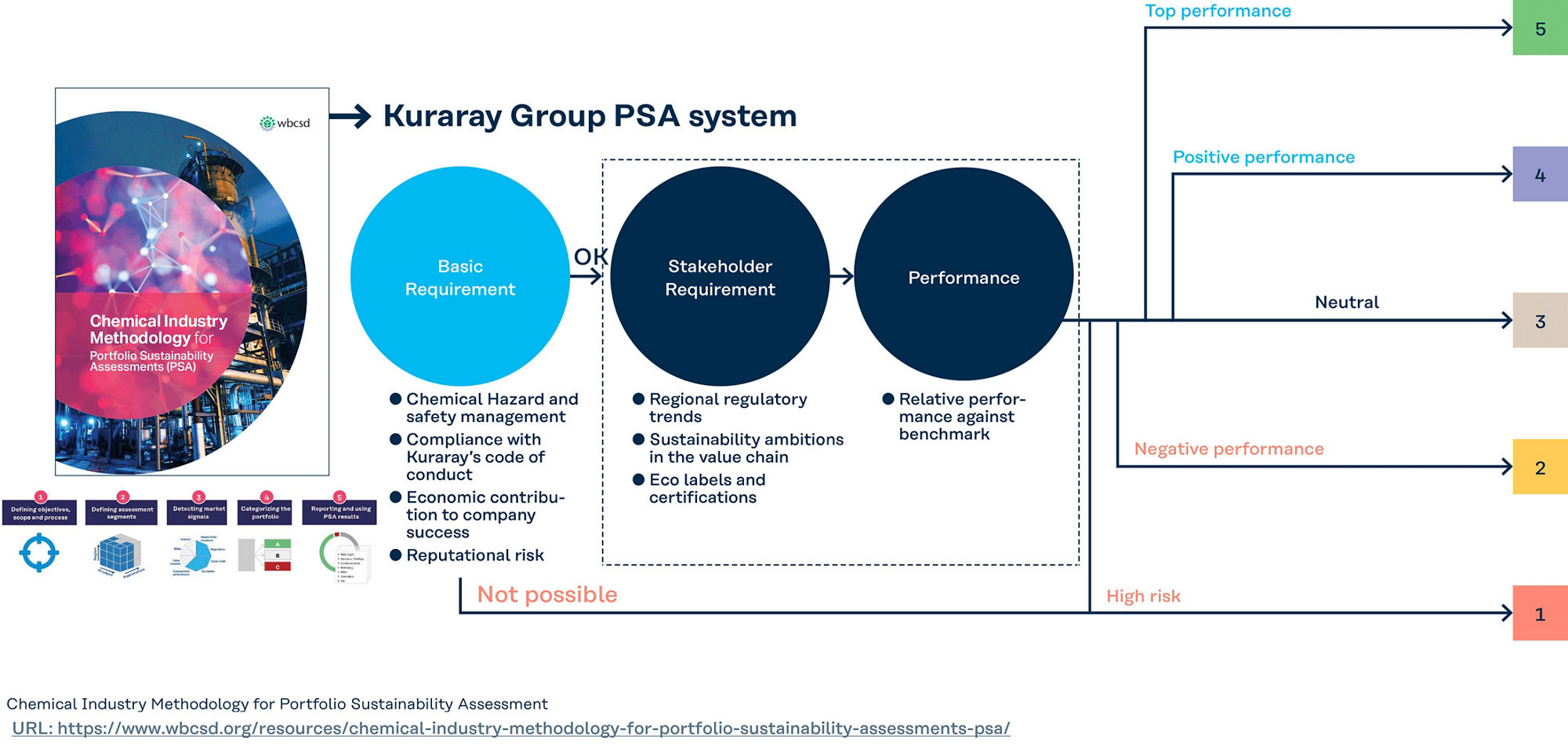
The Kuraray Group PSA system is as follows.

1 Scope of assessment
All businesses of the Kuraray Group are subject to assessment. We will gradually expand the scope of assessment, aiming to cover 80% of overall revenue of Kuraray products. We will also consider to use our PSA system at the stage-gate phase of product development.

2 Definition of PARCs
Product-Application-Region Combinations (PARCs) indicate the unit used in PSA system.

3 Assessment categories
Total nine categories are assessed in the following three areas.
〇 Basic Matters (Basic Requirements):
・Chemical Hazard and safety management;
・Compliance with Kuraray's Code of Conduct
・Economic value
・Reputational risks
〇 Social and Regulatory Trends (Stakeholder Requirements):
・Anticipated regulatory trends (Global / Regional)
・Sustainability ambitions in value chain
・Certification systems in the areas of sustainability and the environment (eco labels and certifications, etc).
〇 Comparison with Benchmark Products (Performance):
・Selecting key categories for each PARC at every stage of the product life cycle (from manufacturing to disposal) from the perspective of sustainability; comparing the performance with benchmarks for each category
4 Scoring
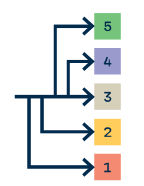
Determining a score from 1 to 5
5 Use of results
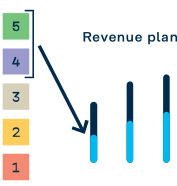
Designate products with a score of 4 and 5 as products that contribute to Natural and Living Environment, and set targets for improvement.
Targets
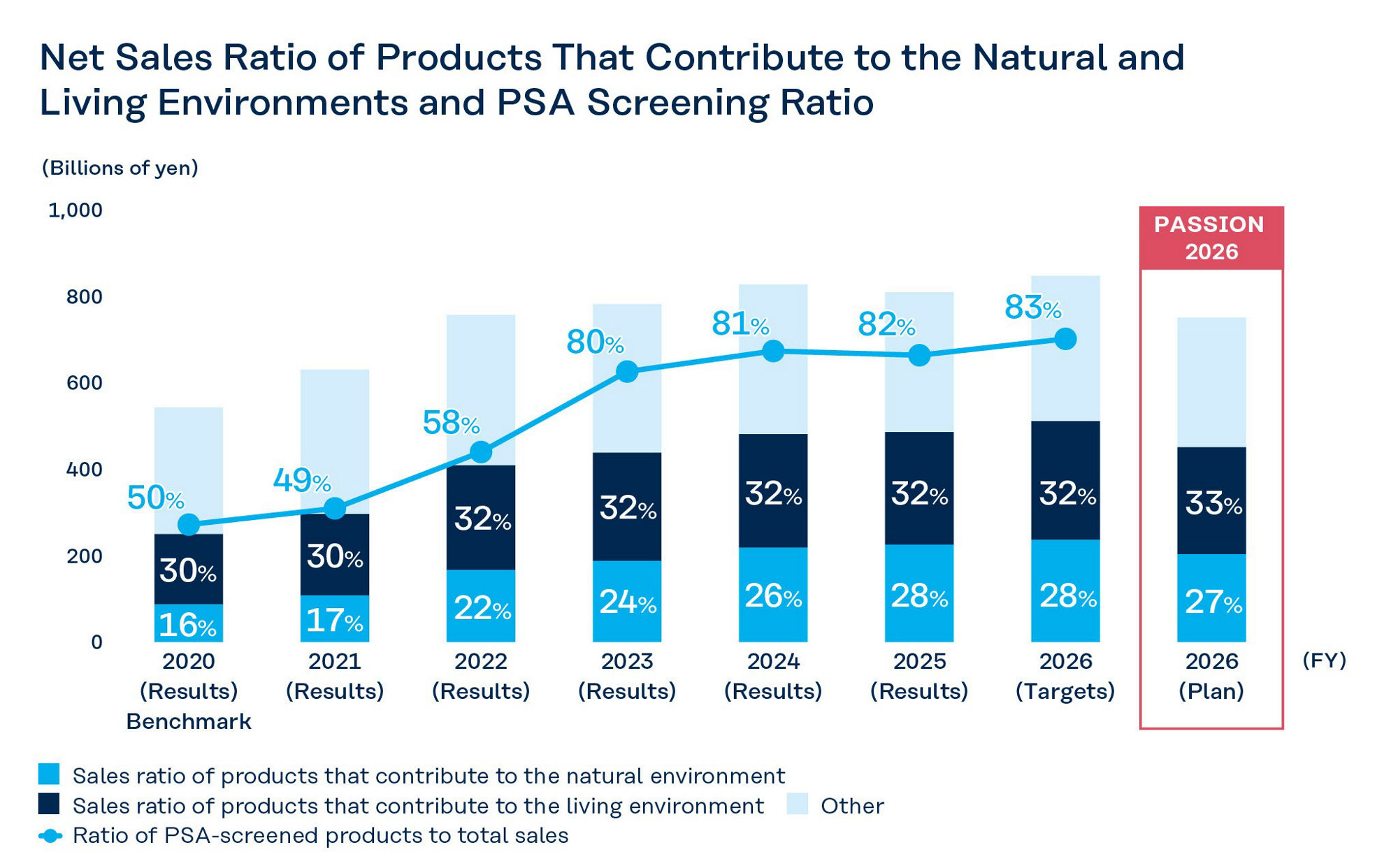
In the Sustainability Medium-Term Plan, the Kuraray Group set a target of raising the sales proportion of products that improve the environment and enhance quality of life to 55% in fiscal 2024 and 60% in fiscal 2026.
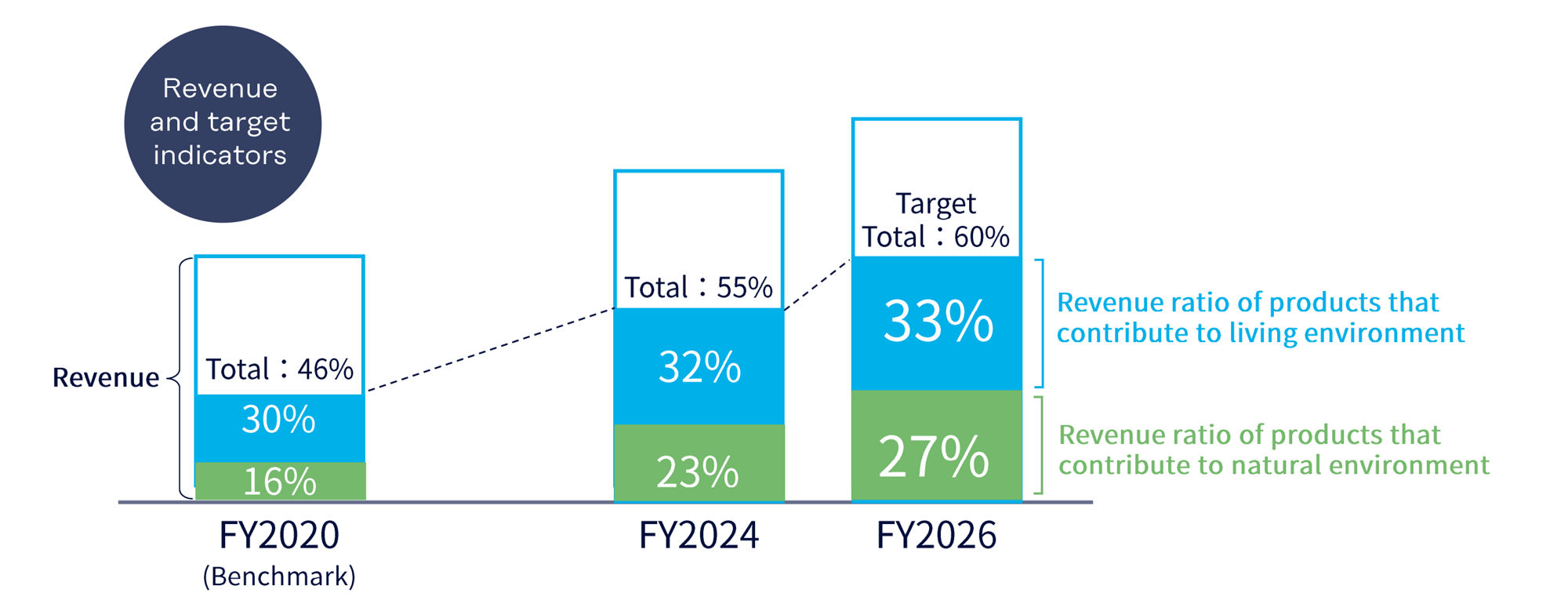

As part of the Kuraray Group’s materiality, we have identified Improving the Natural Environment and Improving the Living Environment through our business activities. To assess products and technologies that contribute to these material issues, we developed the Kuraray PSA System and began screening in 2021. In 2025, we began revising our evaluation criteria in line with updates to the WBCSD guidelines.
Under the Kuraray PSA System, products are evaluated on a five-level scale. Products in the top two ranks are classified as products that contribute to the natural and living environments, and we are aiming to increase the sales ratio of such products. At the same time, we are also aiming to improve the PSA screening ratio across all Kuraray Group products.
In 2025, the ratio of net sales from products that contributes to the natural and living environments and the PSA screening ratio were 60% and 82%, respectively slightly below the targets for 2025; however, both showed growth compared with the 2024 results. In addition, we achieved the “PASSION 2026” final-year target for the ratio of net sales from products that contribute to the natural and living environments ahead of plan.
Going forward, we will seek to link the Kuraray PSA System with financial information such as profitability and non-financial information such as GHG emissions, and contribute to the further enhancement of our business portfolio.
Kuraray Group Products that Contribute to the Natural and Living Environments
- Products for the Natural Environment


- Products for the Natural and Living Environments (Products that contribute to both)


- Products for the Living Environment

