From LCA to Customer Value Partnering for impact-driven CO₂ reduction
Anyone who wants to assess the sustainability of products quickly reaches certain limits. Looking only at CO2 values rarely tells the whole story. To understand environmental impacts in a truly holistic way, broader approaches are needed. This is where life cycle assessments (LCAs) come into play.
What is a Life Cycle Assessment (LCA)?
A life cycle assessment (LCA) evaluates the environmental impacts of a product across its entire life cycle—from raw material extraction and production to use and end-of-life. It helps identify where the greatest impacts occur and where targeted improvements can be made.
Kuraray uses LCAs to analyse the environmental impacts of its products across the entire life cycle and links these insights directly to the value customers create in their applications. In this way, data becomes a robust basis for informed decisions

Why Kuraray relies on life cycle assessments
Life cycle assessments provide a structured foundation for systematically analysing and managing environmental impacts in a targeted way. For Kuraray, they are a key instrument for underpinning sustainability goals with reliable data and making progress measurable.
At the same time, LCAs form the basis for a constructive dialogue with customers. More and more companies depend on robust environmental information - for example, to calculate Scope 3 emissions, meet regulatory requirements, or make well-founded material choices. Kuraray is therefore working to prepare LCA results in a way that makes them usable in specific application contexts - for selected products and applications, for example in AIS Films, from material selection through to the optimisation of existing solutions.
More than just the product carbon footprint
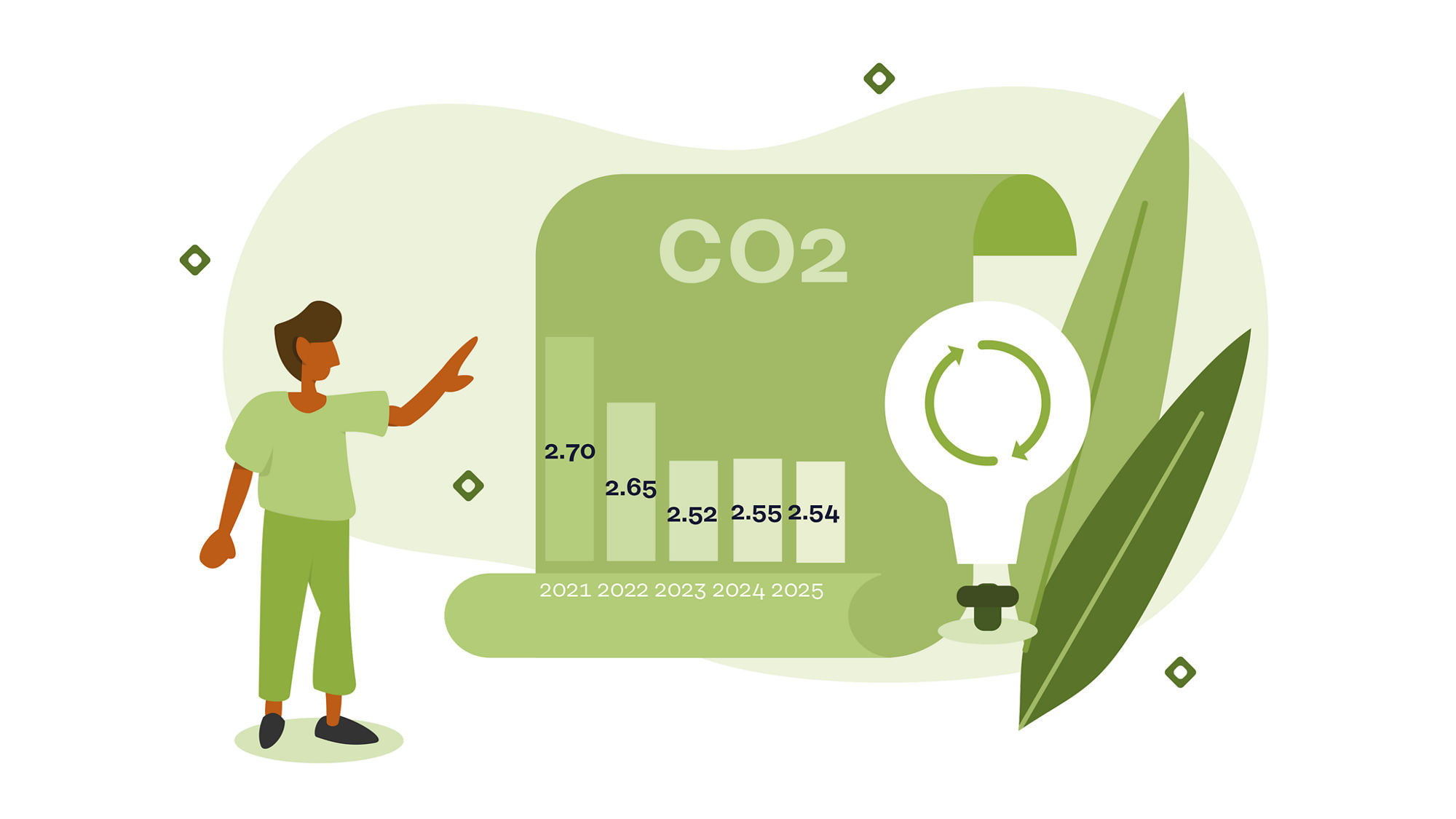
The product carbon footprint (PCF) is often the first indicator that companies look at. It shows how many greenhouse gas emissions are associated with a product, for example per kilogram of material (kg CO2 equivalents per kg of product). For Kuraray, this figure is an important starting point for dialogue with customers.
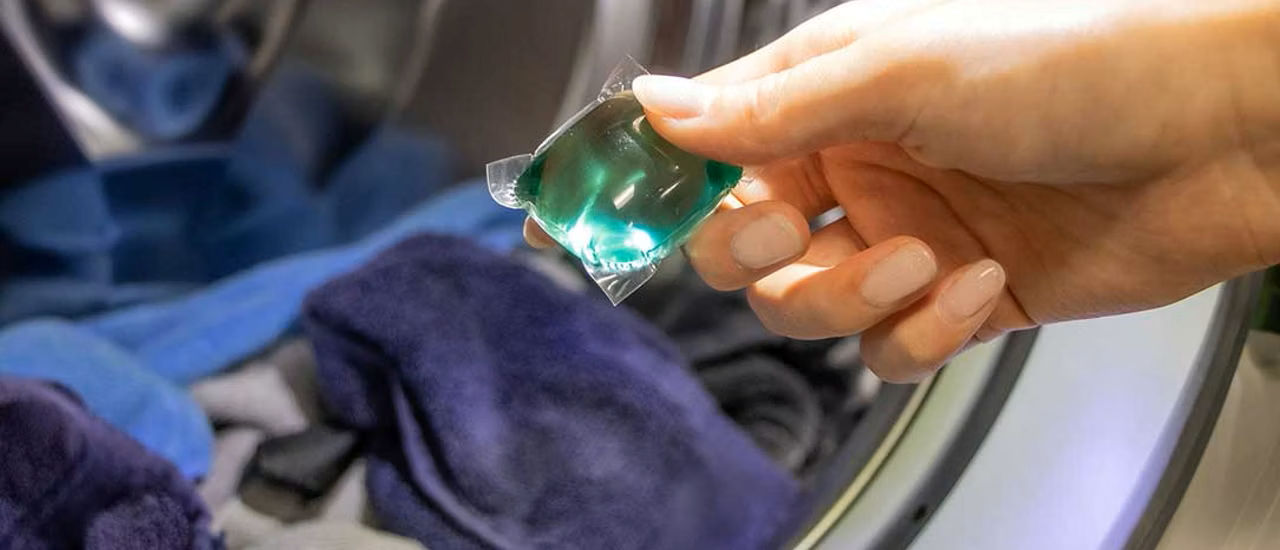
One example is KURARAY POVAL™, Kuraray’s globally produced polyvinyl alcohol (PVOH). For this product, Kuraray provides transparent environmental information, including CO2 data. In practice, PVOH is used in many water soluble applications, for example in unit dose systems for cleaning or laundry products. Here, the material enables precise dosing, reduces overconsumption, and can help minimise packaging and product losses.
similar effect can be seen in technical applications or when used as a functional layer in packaging. Materials are selected to provide specific functions - such as barrier properties or solubility - and can thereby enable simpler or more material-efficient designs. This can noticeably influence resource use along the entire value chain.
These examples highlight what is crucial: not only are emissions during production relevant, but also the effects during use. A material may cause emissions during manufacturing while simultaneously helping customers reduce consumption, simplify processes, or extend product lifetimes.
LCAs help make these relationships transparent and quantifiable. This also makes decisions easier to understand that may appear contradictory at first glance - for example, when material use increases slightly but the overall life cycle balance improves.
Whether in packaging, technical applications, or industrial processes, the key benchmark is the overall performance of the final product. This is precisely where Kuraray focuses, with the ambition not only to supply materials, but also to make their impact within the system transparent.
Orientation in a complex landscape
Many of Kuraray’s customers face similar challenges. They want to reliably capture their Scope 3 emissions, implement science-based climate targets and at the same time meet growing transparency requirements. To do this, they need consistent and compatible data along the entire value chain.
Kuraray supports its customers not only with internally verified and quality-assured LCA and PCF data. The focus is on concrete questions, what contribution does a material make to a company’s emissions profile? Where are the biggest levers along the life cycle? And how do alternative solutions perform in direct comparison? Such assessments become possible when data and application are considered together.
From data to partnership
For Kuraray, transparency is not an end in itself, but a foundation for collaboration. By providing environmental information and discussing it jointly with customers, LCAs become a practical tool that feeds directly into development and decision-making processes.
The added value emerges where data is translated into concrete action: when LCA results influence design decisions, when materials are deliberately selected or substituted, and when it becomes clear how specific solutions contribute to achieving climate targets.
In this role, Kuraray sees itself as a partner to its customers - with transparent life cycle assessments, a clear focus on application, and a strong commitment to making sustainability both measurable and actionable.